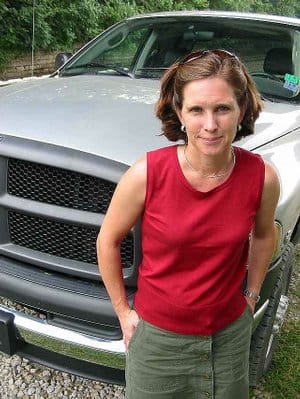
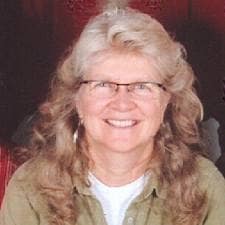
Nancy O'Connor is the Director of Education & Outreach at the Merc. She is also the author of the "Rolling Prairie Cookbook" – a celebration of fresh local produce. She came to Lawrence Central's 8/29 meeting to tell us about their School Garden Program.
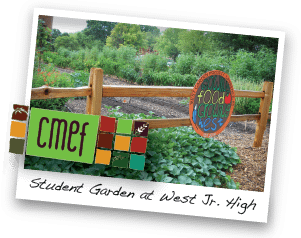
Right now there are three gardens at West Junior High, Sunset Hill Elementary, and Hillcrest Elementary. The entire project is designed to help change the way our school children interact with food. With help from The Merc Coop, LiveWell Lawrence, the Elizabeth Shultze Environmental Fund, Self Assists Foundation, and countless business and community partners, they have established beautiful gardens on the grounds of three Lawrence Public Schools. Students at West Junior High are employed by The Merc to tend the Gardens over the summer as a job training and leadership development program. The produce is sold at a student-run farmers market and eaten in the schools' cafeterias. To learn more about the visit http://www.themerc.coop/gardens.cfmor email Nancy at cmef@themerc.coop
Lawrence Central also expressed our deep gratitude to Nancy and the staff at the Merc for coming out to our Community Bike Ride and providing healthy snacks.
Earlier this summer Lawrence Central raised the funds for our first Shelterbox. Well, we’ve received our tracking number and are now waiting to see where it will be deployed. Lawrence Central’s box is #021404 and we can check to see where it’s been deployed here: http://www.shelterboxusa.org/trackbox.php
ShelterBox is a global humanitarian aid organization that provides shelter and life-saving equipment to people affected by disaster – such as earthquakes, volcanos, floods, hurricanes, cyclones, tsunamis or conflict by delivering aid to the world’s most vulnerable. We work closely with other aid agencies to fill the gap. Other aid organizations have told us that our green box stands out as a symbol of hope in a landscape of disarray. In many cases, our boxes make the difference between life and death.
When disasters strike, ShelterBox works to ensure emergency shelter reaches those locations as quickly as possible, thanks to the generous support of people like you, who are truly making a difference. ShelterBox has firmly established itself at the forefront of international disaster relief, providing aid to survivors of over 170 disasters in nearly 80 countries.
ShelterBox relies significantly on donations like yours. Every dollar goes toward supporting our mission—to provide humanitarian aid in the form of shelter, warmth and dignity to people displaced by disasters.
So What’s in a Shelterbox anyway?
Shelter
At the heart of every ShelterBox is a disaster relief tent for an extended family. It is custom made for ShelterBox by Vango, one of the world’s leading tent manufacturers, and is designed to withstand extreme temperatures, high winds and heavy rainfall. Internally, each tent has privacy partitions that allow recipients to divide the space as they see fit.
Warmth and protection
In addition to the tent, there is a range of other survival equipment including thermal blankets and insulated ground sheets, essential in areas where temperatures plummet at nightfall. Where malaria is prevalent, mosquito nets are supplied, as well as life-saving means of water purification.
Water supplies often become contaminated after a major disaster, as infrastructure and sanitation systems are destroyed. This presents a secondary but no less dangerous threat to survivors than the initial disaster itself. Our water purification equipment, the LifeStraw pictured below, can provide a typical family up to three years worth of clean and safe water.
Self sufficiency
A basic tool kit containing a hammer, axe, saw, trenching shovel, hoe head, pliers and wire cutters enables survivors to improve their immediate environment by chopping firewood or digging a latrine, for example, then when it is possible, to start repairing or rebuilding the home they were forced to leave.
Fit for purpose
Every item is durable, practical and brand new. The box itself is lightweight and waterproof and has been used for a variety of purposes in the past – from water and food storage containers to a cot for a newborn baby.
A heart to the home
Key items are either a wood burning or multi-fuel stove. The multi-fuel stove can burn anything from diesel to old paint. Some boxes also contain our specially designed wood burning Frontier Stove, pictured below. This provides the heart of the new home where water is boiled, food is cooked, and families congregate. In addition, there are pans, utensils, bowls, mugs and water storage containers.
A smile
A children’s pack containing drawing books, crayons and other supplies. For children who have lost most if not all their possessions, these small gifts are treasured.
Adaptability
We keep a broad range of equipment in stock so we can adapt the contents of a box to a specific disaster. For example, following the Javanese earthquake in 2006, when some resources were available locally or could be salvaged from buildings, the overwhelming need was for shelter – so we just sent tents, packing two in each box.
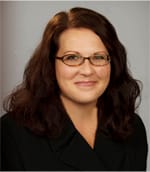
Sara Hill-Nelson spoke to Lawrence Central on Aug 22nd and gave us an update on the progress of the North Powerhouse project that will replace the spillway on the north end of the dam, and will house four additional turbine/generators, for a total capacity addition of 4.6 MW. The addition of the generators will allow Bowersock to approximately triple the energy production from the project.
She even showed pictures of the plans from the 1920’s of the possible expansion to the north bank of the Kaw that almost a century later is now a reality.
During the past 130+ years, the mill has ground grain into flour, produced the first ready-make gingerbread cake mix, hosted a radio station, been a paper mill, made barbed wire, and produced power – both electrical and mechanical. Before electrical power was widely available, leather belts were connected to the waterwheels at Bowersock, and ran either on tall poles or through tunnels to their respective businesses. The famous Eldridge Hotel on 7th and Massachusetts where Lawrence Central has our meetings is said to retain its generators in the basement, where the belts used to be attached.
Sarah Hill-Nelson of the Bowersock Mills & Power Company
Sara’s passionate talk about the benefits of hydro-electric power as a renewable energy source. As she pointed out, renewable energy is any source of energy that is constantly being replaced, or at least, a source of energy that will not be depleted in any reasonable time frame. By convention, renewable energy sources are also environmentally friendly; it is Green Power. For example solar energy is a renewable energy, but in a few billion years the sun will consume all of its fuel. However, for all practical purposes, the energy supply from the sun will always be available to us.
The major types of renewable energy are: wind, photovoltaic (solar), solar thermal, geothermal, oceanic, biomass, and hydroelectric.
Hydroelectric power is the kind of green power produced by Bowersock Mills and Power Company. It produces no toxic emmisions, nor does it contribute to global warming or acid rain. In fact, by using hydropower instead of fossil fuels, Bowersock substantially reduces the amount of pollutants in our air.
The pool above the Bowersock dam provides the City of Lawrence with a reliable source of drinking water, even during periods of drought. The area around the Bowersock dam has also become a favorite hunting and nesting area for our national symbol, the bald eagle, during the winter months. This is green power at its best! If your house were powered by hydro power rather than coal you would prevent 7.2 tons of carbon dioxide from entering the atmosphere each year. How “green” is Bowersock? While there is some debate over the environmental impacts of hydroelectric power, Bowersock has been designated as a “low-impact” hydropower facility. This means that in comparison to other hydroelectric power plants, Bowersock’s environmental impacts are limited.
Hydropower is the most developed of all renewable energy technologies. Ten-percent of our nation’s (20% of the world’s) electricity demand is supplied by hydropower. That is enough electricity to supply 28 million households, or the equivalent of one-half billion barrels of oil. If this power was produced by coal-fired generating stations, 7.7 million tons of particulates and 296 million tons of carbon dioxide would be added to the atmosphere annually. Yet hydropower is being generated at only 3% of our nation’s 80,000 dams. The Federal Energy Regulatory Commission (FERC) estimates that hydropower generation could be more than doubled by modifying existing dams. Worldwide, hydropower supplies 24% of electricity demand, enough for about one billion people.
They welcome the public for Bowersock tours. It is a great way to learn about renewable energy and the history of Lawrence. Tours are offered on the 3rd Friday and the 4th Saturday of every month beginning at 10:00 AM.
All if you want to read more about The Bowersock Hydropower plant here is a link to their website.
Charlotte Tritch who is the Associate Director of Entrepreneurship Programs in the KU Business School spoke to Lawrence Central on August 15th about the programs the Center for Entrepreneurship offers and a peek at some of the exiting things they are working on.
The interesting piece she pointed out is that Entrepreneurship classes are available to all 30K KU students allowing them to “commercialize their passions” helping both undergraduate and graduate students to develop an entrepreneurial mindset by thinking innovatively, recognizing potential business opportunities, amassing resources and familiarity of how to launch and grow a business. For more info go to the KU School of Business website.
Charlotte also touched on their new Red Tire Program that matches well qualified KU and other Kansas regents schools graduated students and alumni with small to medium companies needing new ownership/management. The RedTire program, a partnership between the KU Entrepreneurship Works for Kansas initiative and the Kansas Small Business Development Centers, is designed to address the closing of viable rural Kansas businesses due to the lack of a successor or exit strategy. Without the RedTire program, and with the shuttering of businesses, there will be a loss of those services in the community, a decline in the local tax base and a loss of equity for the business’ owner. For more info on this program you can go to http://redtire.org
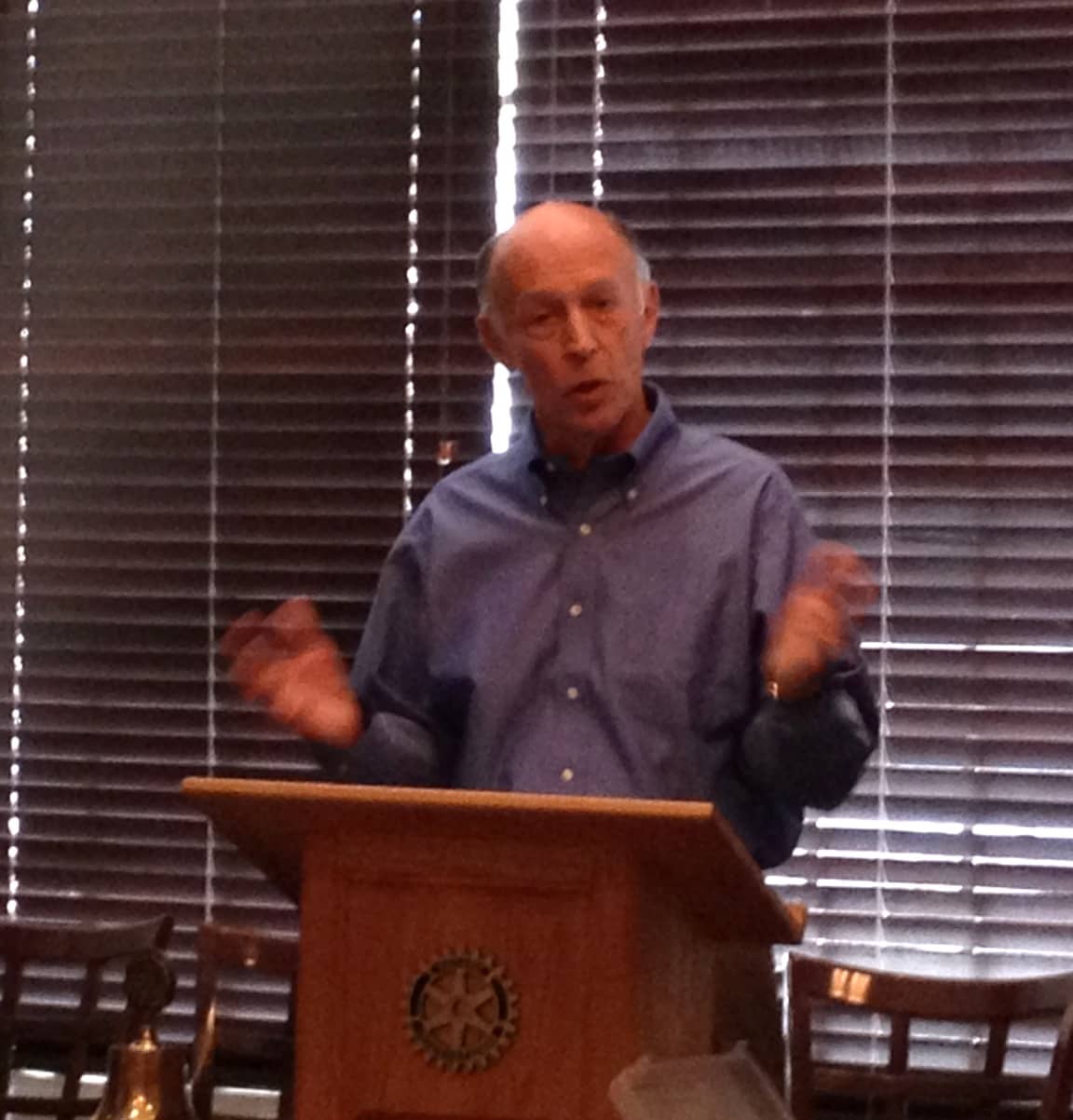
Ted Haggart spoke to Lawrence Central August 8th about local and regional economics, housing and outside variables that are impacting the local economy.
He joined Douglas County Bank in April 2001. His time is balanced between customer relationships and recruiting new customers, leadership and management of the bank, and community service activities and working with the bank’s board of directors. Mr. Haggart’s community activities include serving as past chair of the Lawrence Regional Technology Center, past president of the Lawrence Rotary Club, co-chair of the Lawrence Bioscience Task Force, and past president of the Friends of the Lied Center. He currently serves on the Board of Directors for the Lawrence Memorial Hospital Endowment Association and Lawrence Junior Achievement.
Other previous board memberships include the United Way of Douglas County, the Friends of the Spencer Museum of Art, and the Kansas Technology Enterprise Corporation (KTEC). Before joining Douglas County Bank, Mr. Haggart was president of Union National (now Commerce Bank) in Manhattan and senior vice president of First National Bank (now Sunflower Bank) in Salina.
He was an economics professor at Kansas State University, executive director of the Kansas Economic Education Council and an economist for the U.S. Senate Budget Committee. He graduated from the University of Kansas with degrees in economics and mathematics, and received a Ph.D. in economics from the University of Minnesota.
 Right now there are three gardens at West Junior High, Sunset Hill Elementary, and Hillcrest Elementary. The entire project is designed to help change the way our school children interact with food. With help from The Merc Coop, LiveWell Lawrence, the Elizabeth Shultze Environmental Fund, Self Assists Foundation, and countless business and community partners, they have established beautiful gardens on the grounds of three Lawrence Public Schools. Students at West Junior High are employed by The Merc to tend the Gardens over the summer as a job training and leadership development program. The produce is sold at a student-run farmers market and eaten in the schools' cafeterias. To learn more about the visit http://www.themerc.coop/gardens.cfm or email Nancy at cmef@themerc.coop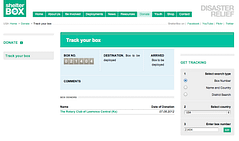


 Self sufficiency


 Adaptability