Author: Kate Campbell

  • Lawrence Fair Housing Ordinance of 1967 Commemorated by Oral History and Documents

    Tom Arnold | Lawrence KS
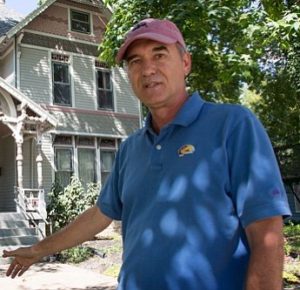
    Lawrence Historian Tom Arnold (Photo Credit LJWorld)

    The City of Lawrence was one of the first communities in the nation to establish a Fair Housing Ordinance, said local historian Tom Arnold. This important event took place in Lawrence in July 1967, well before the federal Fair Housing Act was enacted in 1968.

    Tom Arnold has spent the past months doing research and developing an oral history to commemorate the passage of Lawrence’s Fair Housing Ordinance fifty years ago. After thirty years in the U.S. Navy, Tom came to Lawrence to teach Naval Science at KU for three years as an adjunct professor. He retired from the University six years ago and began volunteering at the Watkins Museum. As the anniversary of the Fair Housing Ordinance approached, Arnold took the archival work that began in the City Attorney’s office by LCR member Scott Wagner, Management Analyst, and accepted the task of developing an oral history to complement the historical documents. Those interviews were conducted in October and November 2016. The goal was to get the personal perspectives and motives of individuals who participated in this important set of decisions in Lawrence during the 1960s.  Arnold conducted nine interviews with eleven people, generating twelve hours of recordings.  The recordings have now been transcribed so that they are searchable for future research needs.

    The milestone anniversary of the Fair Housing Ordinance will be celebrated with a variety of events and displays during the coming months. There will be a visual display at the Watkins Museum and a traveling exhibit as well. Documents will be archived at the KU Spencer Museum.

    The Lawrence Human Rights Commission (HRC) was established in 1961. Before that time, none of the public swimming pools were open to non-whites. Businesses routinely segregated Afro-Americans and even refused services.  The Fair Housing initiative began as a grassroots movement among Lawrence citizens in 1964 when the Lawrence Fair Housing Committee formed. Attempts to pass state legislation on Fair Housing failed, so the group transferred their focus to the local level. The Lawrence Ordinance was the result of effort and risk-taking by many to address the housing discrimination and inequities that existed in the Lawrence community. The Committee sent a resolution to the Human Relations Commission of the City of Lawrence in 1967. By that time, there was broad support. Many community groups and churches collaborated to bring this significant milestone to reality.

     

  • Dr. Roger Dreiling Urges A Questioning Attitude for Good Heart Health

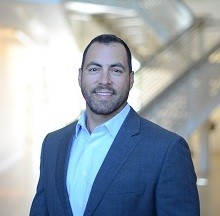
    “Question everything!” says Dr. Roger Dreiling, head of Cardiology Services at Lawrence Memorial Hospital. It was advice that he received from a mentor early in his medical career. Questioning led Dreiling to solve emergency situations in innovative ways and to avoid recommending procedures that had not been through rigorous medical trials. He believes that doctors who ask questions are more likely to use the correct medical tool or procedure and to refer patients to the most appropriate area of expertise to address their health problems.

    Dr. Dreiling described the evolution of treatments used to help patients suffering from heart disease. It was a questioning approach that led to innovations. Years ago, for example, doctors knew that the drugs prescribed to help with some of the symptoms of heart disease caused dangerous side effects. Some physicians experimented with treatment using angioplasty, even though that course of action was not approved by the profession at the time. By 1993, the use of angioplasty emerged as the safest and best alternative for many patients. Dreiling prefers to use this procedure at LMH to avoid the side effects of drugs and the dangers of surgical options whenever possible.

    From thirty to fifty people present with symptoms of a heart attack (acute myocardial infraction) at the Cardiac Cath Lab at Lawrence Memorial Hospital each year. Dreiling and his team of doctors, surgeons, and technicians respond to those situations 24/7, frequently using angioplasty. The department has  very low mortality rate—only 5%. They have saved hundreds of lives during the past nine years.

    Trained in pharmacology before he pursued a medical degree at University of Kansas School of Medical, Dr. Dreiling is board certified in Internal Medicine, Cardiology, Cardiovascular Disease, and Interventional Cardiology.

  • District Governor Chris Ford Stresses Vitality and Membership

    DG Chris Ford, District 5710

    In introducing District Governor Chris Ford, Lawrence Central President Jim Peters listed the club’s activities, both local and international.  He named community bike rides, wreath sales, and fireside dinners as well as support for LiveWell Lawrence, Willow Domestic Violence Center, Salvation Army bell ringing, the Rotary Arboretum, and internationally, support for Shelter Boxes, the Open World Program, and Sister Cities, among many others.

    “We’re a ‘DO IT’ club,” Peters said.

    This attitude emphasized Ford’s theme of creating an active, vital group. Ford is passionate about Rotary, both its future and its past. He began his talk with a quote from founder Paul Harris that illustrates that enthusiasm. “Be passionate about Rotary. Embrace change,” Harris wrote in 1907 when the social club he had started in 1905 became a service club. “Paul Harris had real foresight,” Ford said. “He said for Rotary to achieve its proper destiny, it must be evolutionary and, at times, revolutionary.”

    Ford said his goal for 2017 is 3,000 Rotarians in District 5710. “We’re a small district with 45 clubs. I want a growth rate of 20% for our clubs.“ He outlined three goals for Rotary clubs: new members, retention of current members, and improved attendance. He said we must inspire members to stay in Rotary and have the quality of programs that will keep attendance high. Rotary projects are important. Polio has been conquered but other worldwide concerns include literacy and education, maternal and child health, clean water, and a host of others.

    Ford closed his talk with an invitation to the District Conference, May 5-6, in Overland Park. His goal for the conference is to make it inspirational with more Rotarians attending. “The conference,“ he said “is to celebrate Rotary.”

  • A Bus Is a Bus Is a Bus – Bob Nugent from Lawrence Transit Visits Lawrence Central

    Bob Nugent

    Bob Nugent, Administrator of Lawrence Transit, assured members of Lawrence Central Rotary that getting on any bus in town, no matter what the shape or the marking, can get riders where they want to go—six days a week, 307 days a year.

    The City of Lawrence and the University of Kansas began coordinating their bus systems in 2009 through a memo of understanding.  Their cooperation means that riders in Lawrence pay a universal fare, no matter which bus they take.   Communication about routes, schedules, policy and procedures are found on a common website.  The two entities share vehicles and have a joint maintenance facility as well.  The cooperation between KU and the City allows the system to flex for high volume routes near campus and lower intensity routes in the perimeter of Lawrence.  There are nine routes that use 51 vehicles during peak times.

    The City of Lawrence contributes $2.3 million annually, income from a 2.5% sales tax to support the buses and related transportation services.  Those dollars are supplemented by around $2 million in Federal money and $290,000 in state funds.  KU contributes $3.3 million collected from student fees and $1.5 million gleaned from parking revenue on campus. These coordinated services have 2.9 million passengers annually and have been recognized with awards for Ridership, Sustainability and System of the Year, since 2008.

    A bus is a bus is a busMembers of Rotary testified to the high quality of customer service from bus drivers in Lawrence.  The City offers door-to-door service on “the T” by appointment, especially helpful to riders with physical limitations.  Riders may also call in advance for flex service and for rides between 8:00 p.m. and 6:00 a.m.  KU service includes Safe Bus and Safe Ride for students who call to request pickup outside of normal bussing hours.