Blog

  • Haitian and US History Entwined

    Cecile Accilien, Ph.D., is Associate Professor and Director of the Institute of Haitian Studies in the Department of African and African-American Studies at KU.  Although born in Haiti, she has lived in states all across the United States.  She urged Rotarians and political leaders to reject negative stereotypes about Haiti, learn about the country’s distinguished history and connection to the United States, and understand how that history has resulted in Haiti’s situation in the world today.

    Several hundred Haitians fought on the side of American revolutionaries in 1779 at the Battle of Savannah, Georgia. A statue was erected in 2010 in downtown Savannah commemorating the event.

    Haiti is the world’s first black republic.  Its slave revolution won independence from France in 1804, making it the second independent nation in the Western Hemisphere after the United States. The United States waited nearly 50 years to recognize Haiti’s independence, fearing a contagion that would inspire American slaves to rise up to an even greater degree.

    President Thomas Jefferson was able to buy the Louisiana Purchase from France in 1803 because Napoleon had lost control of Haiti (then known as Saint-Domingue) due to the courageous fight of the Haitian people.  The “gingerbread architecture” of homes in Louisiana, language, food, and religion all had roots in Haiti.

    For 19 years (1915-1934), the United States occupied Haiti, completely controlled the country, and rewrote its constitution to benefit American economic interests. Haiti was a powerhouse supplier of sugar, rum, and indigo to its northern neighbor.

    In Fall 2018, an art exhibition at the Spencer Museum of Art at KU will highlight “The Ties that Bind:  Haiti, the United States, and the Art of Ulrick Jean-Pierre in Comparative Perspective.”  The exhibition notes explain that “both the United States and Haiti were impacted by complex encounters among European colonizers, Indigenous populations, and enslaved peoples. These nations share common revolutions for independence and violent but ultimately successful attempts to abolish slavery. The ongoing migration of citizens between Haiti and the United States has led to hybrid forms of architecture, language, food, and religion.”


  • New Talent and Energy Joins Lawrence Central

    Three of the newest members of Lawrence Central Rotary shared the spotlight in a recent panel interview. All are excited about how Rotary can expand their networks of friendship and opportunity for community service in Lawrence.

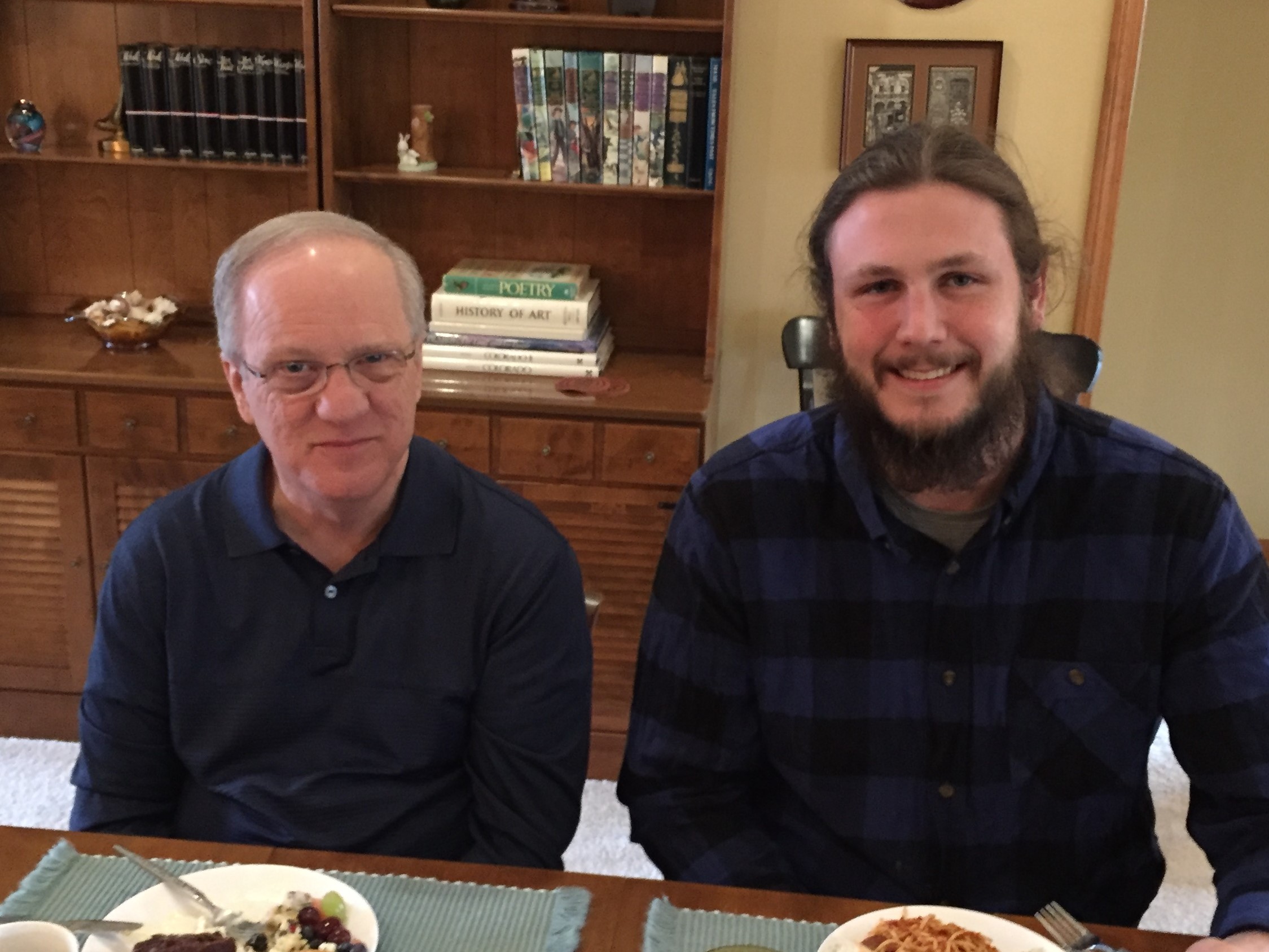
    Lee Anne Thompson (left) is AVP and Employee Benefit Officer at The Trust Company of Kansas (TCK). Lee Anne grew up in Hayes. After earning a degree in finance at Kansas State, she moved to Wichita to work for TCK for a number of years. She spend eight years as IT manager at another Wichita business before returning to TCK in 2012 at the Lawrence office. Lee Anne serves on the board of the Lawrence Community Orchestra and has been active in the music ministry at her church. She has been a foster parent and has a passion for serving neighbors, clients, friends and others that may be in need. To see her smile, ask her about her dogs. Lee Anne relished the childhood freedom to ride her bike or her horse all over small-town Hayes. A favorite memory is the laughter when her family played card games together.

    Gena Dellett (center) grew up in Concordia, KS. Although her father was a dairy farmer, she considered herself more of a town girl. She was active in Rotary programs even during high school and helped to start a Rotoract Club while attending University of Rochester, NY. She was living in Alamosa, CO, when she joined a Rotary club in 2014. Gena moved to Lawrence in recent months with her husband and two young children. Professionally, she specializes in communications and in relationships, working remotely as an account manager for Wanna Pixel, a technology company. Gena tried hot air ballooning while living in Colorado and loves it. She believes that purpose is key to leading a successful life; she values family over career and believes that earning money is a means, not an end.

    Leticia Cole (right) has worked with Paul Werner Architects for the past 11 years. Although she lived in Lawrence in grade school, she graduated from high school in Topeka. After earning a degree in Architecture at KU, she spent professional time in Phoenix and in St. Louis before returning to Lawrence. Leticia is a graduate of Leadership Lawrence and serves on the board of Catch-A-Break. She thinks our Club will be a good fit for her as she enjoys doing anything outdoors—biking, yard work, camping. A favorite adventure was a raft trip through the Grand Canyon with her husband.

  • Audrey Coleman Honored with Becky Castro Award

    Audrey Coleman received the Becky Castro Award from President Fred Atchison at Lawrence Central Rotary’s annual anniversary event.  He thanked Coleman for her work and dedication on a significant initiative to fulfill the Club’s mission–the acquisition of Lawrence Kids Calendar.

    In June 2017, Lawrence Central Rotary Club decided to purchase the Lawrence Kids Calendar website.  They recognized the website as a fundraising opportunity as well as a public service initiative that was focused on youth and family activities. During the past year, Coleman has taken the role of Project Manager for Lawrence Kids Calendar, providing leadership and coordination during the Club’s acquisition and implementation of the online tool. Coleman is currently President-Elect of Lawrence Central Rotary.

    The Becky Castro Award was established in 2014 in memory of founding club member Becky Castro in recognition of her lifelong dedication to community service.  It is presented periodically to a member who has put forth exceptional efforts in time, expertise, and personal resources on behalf of Lawrence Central Rotary; been instrumental in shaping and promoting the strategic direction of the Club; made major contributions to the realization of our mission, goals, and objectives; and enhanced the value of membership for all.

    Two other club members were recognized during the anniversary celebration as well.  Jim Peters and Shelly McColm were honored as Paul Harris Fellows in thanks for their service.  Peters was President from 2016-2017.  Since that time, he has served a year as Past President and has been active with the launch of Kids Calendar and with the Program committee.  McColm has served as Club Secretary/Administrator since 2015.  She helps regularly to post events on Lawrence Kids Calendar.

    Atchison says, “LCR is a small club which means just about everybody pitches in to get things done. So many club members deserve recognition and thanks. Audrey Coleman, winner of the Becky Castro award, received special recognition for her extraordinary work in managing the acquisition and set up of our new club project: the Lawrence Kids Calendar. This year we are also proud to see Shelly McColm and Jim Peters recognized as Paul Harris Fellows. They have provided great leadership year after year. Thanks to these Rotarians for their good work.”

  • J. R. Brinkley: Medical Quack and Marketing Genius

    Jerry Harper, a retired Lawrence lawyer, told Rotarians about Dr. J.R. Brinkley, the notorious goat-gland doctor from Kansas.

    In 1917, Brinkley arrived in Milford, KS, to establish a practice. When a local farmer convinced him to transplant goat glands into him to renew his “vim and pep,” the patient and his wife had a baby the following year. News of Brinkley’s success spread rapidly, and soon he was charging $750 per operation, doing 50 procedures each week.

    Although his dubious surgery became a lucrative business, Brinkley was probably more remarkable as a marketer. In 1923, he started the “Sunshine Station in the Heart of the Nation,” a radio broadcast that ran a full schedule of weather, stock market updates, music, even French lessons and college courses. This innovative use of radio broadcasting also promoted good health, recommending his surgical procedure and his medical advice and referring people to his network of pharmacies to supply the remedies.

    When Brinkley began to answer medical questions on the air, however, his medical license was revoked. But his notoriety made it possible for him to run as a write-in candidate for governor of Kansas in 1930, garnering 30% of the vote. After the race, Brinkley moved to Texas and continued to broadcast his messages nationwide. He lost his fortune in the following years and died with nothing in 1942.

    Jerry Harper is a fan of colorful characters from Kansas. In addition to his law practice, he served in the Kansas House of Representatives, taught as an adjunct instructor at the KU Law School and in the KU Humanities Program.

  • Cowboy Songs Tell the Story

    Jim Hoy, author, educator, and Kansas native, sang “The Old Chisolm Trail” to launch his story about the American cowboy.  Cowboys were typically men between the ages of 19 and 22, he explained.  They managed the herds on the long, slow cattle drives from Texas to Kansas, work that was both boring and dangerous.  Cowboys sang to the cattle to calm them and to themselves to pass the time, generating a wealth of music and poetry.

    Kansas is the home of the cowboy, Hoy says, a fact that often surprises people. Over 35,000 men and boys–and a few women–worked the Chisolm Trail after the Civil War, driving long horn cattle from San Antonio, Texas, to be sold in Abilene, Kansas.  It was entrepreneur Jim McKoy who took advantage of Kansas State law and talked the Kansas Pacific Railway into running a spur to Abilene so he could ship cattle East from there.  In the five years (1867-1871) that Abilene was the main Kansas cowtown, over 3,000,000 head went through the pens there. The era came to a close as the town of Abilene grew and changed, more farms developed in the area, and the residents began to resist the rowdy lifestyle that the cowtown fostered.

    Kansas originated the cowboy boot with its high heel and pointed toe.  Even John B. Stetson’s ten-gallon hat has Kansas roots, according to Hoy.  Frank H. Maynard was a Kansas cowboy when he wrote “Streets of Loredo” or “Cowboy’s Lament.”

    Hoy actively helps his son Josh and family who own and operate the Flying W Ranch in the Flint Hills.