Category: News

  • Women Cyclist and Social Change

    Watkins Museum’s Curator and Collections Manager, Brittany Keegan, shared her research on the early days of women cyclists. The role of women in American society was undergoing significant change in the 19th century. So it was no surprise that the development of the bicycle in the 1890’s would interest women. Not everyone was a fan of the new devise as there were dire warnings that cycling was a dangerous distraction and the new machines scared horses. When women began to ride, many critics were horrified. They complained about the fashions that cycling inspired and worried about unchaperoned behavior. The benefits of healthy exercise and the positive environmental impact were recognized and cycling became and important part of our culture for both sexes. Brittany Keegan earned a BA in American History and a Masters in Museum Studies at Kansas University. She is currently working on a new World War I exhibit.

  • Helping Kansans “Aging Out” of Foster Care

    Justine Burton, CEO, StopGap, Inc. 

    Justine Burton told Rotarians about her life experiences she had in her life that inspired her to set up StopGap, Inc., a nonprofit that supports kids who are aging out of the state’s foster care program. Justine is its founder and CEO.

  • Engaging the Arts

    Saralyn Reece Hardy and Mary Kate Connor provided an update on the Spencer Art Gallery, located on the campus of Kansas University. The Spenser is a living archive that facilitates engagement and the study of the arts. Hardy has Directed the institution since 2005 and Connor is a student assistant. Hardy presided over a resent renovation of the Spenser that updated the presentation of the collection, provided a multi-use object study room, expanded the teaching gallery and storage and research areas. The project was also intended to present a more diverse representation of the arts than in the past. Hardy acknowledged the importance of tradition in the arts, but emphasized the need to relate to the present. She stressed the museum’s role in teaching, learning and research and relating to other disciplines. Hardy expects more immersive art experiences to be in the museum’s future.The Spenser is a unique institution with over 47,000 art pieces and places in the top ten of university art museums.

  • Heritage and History


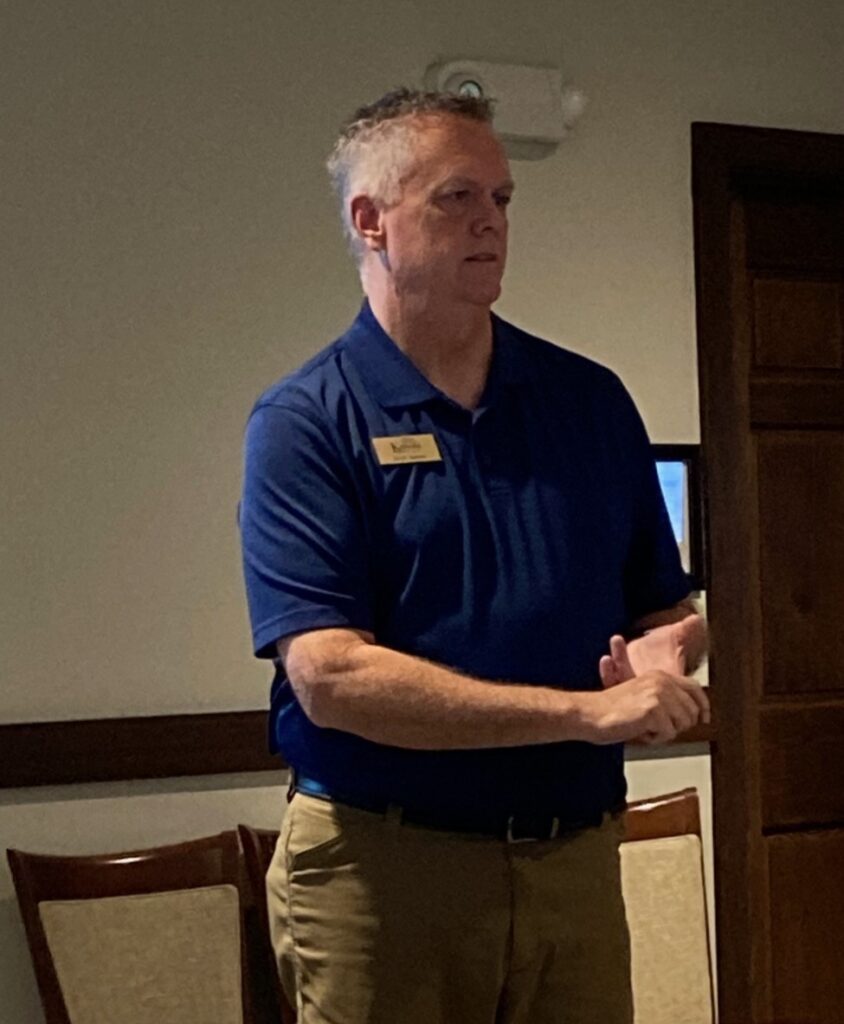
    Stephen Hill has a personal and family heritage of business and community development. He is President of Bowersock Mills and Power Company, a long time Rotarian, a Bishop Seabury Academy Board member, a Watkins Museum Board member and a Trustee of the Kansas City Symphony Foundation. Hill is a first generation Lawrence native and traces his roots to the Douglas County Mills, established by his family in 1874. By the 1870s coal and wood had become too expensive to power early city businesses and the economy suffered. Ferry Operator Orlando Darling proposed building a dam to capture the power of the river. He negotiated a deal with the City but was bankrupted when an ice flow took out the dam he built. Justin Bowersock rebuilt the dam and initiated a period of business development. The dam washed out again in 1903 and it was rebuilt to produce electric power. An impressive period of business development ensued. In the late 1970s a new contract was secured which permitted the development of the south bank of the river and the construction of City Hall, Abe and Jake’s Landing and the present Marriott. The historical damming of the river, the generation of hydro power and subsequent business development played a major part in the growth and prosperity of Lawrence.

  • City News and Information

    City Commissioner Brad Finkeldei visited Lawrence Central Rotary to to answer questions and provide a state of the city report. Commissioner Finkeldei is a member and past president of the Rotary Breakfast Club and earned a Law Degree from Kansas University and a Chemical Engineering Degree from Kansas State University. The Commissioner is a partner with Stevens and Brand, LLP and has served on numerous boards in the community. His focus was on the current Strategic Plan for the city. He explained how the plan was put together and revised, utilizing sophisticated systems that analyze risks and expenses.

    Elements of the plan include Unmistakeable Identity, Strong and Welcoming Neighborhoods, Safety and Security, Prosperity and Economic Security, and Infrastructure Issues. The plan drives the budget and Commissioners review progress indicators periodically. Commissioner Finkeldei took questions on storm water issues, bus lines, housing, the homeless and various street projects. Commissioners and city staff work hard to invest in and manage projects that will maintain and encourage a safe and prosperous environment for city residents.