Category: News

  • Artificial Intelligence: What Does it Mean to be Human

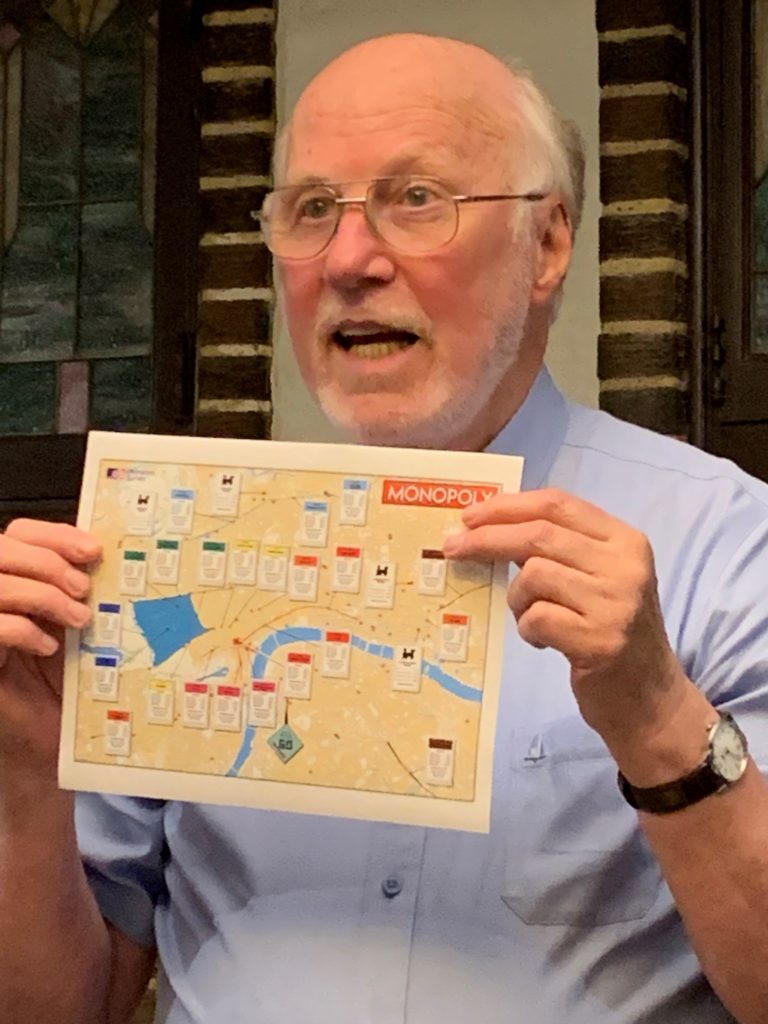
    Dave Mannering | Lawrence Central RotaryThe news is full of stores about artificial intelligence (AI) including self-driving cars and even facial recognition technology and its ethical application.  AI is also the subject of speculative science fiction and futuristic tracts.  Is the end of humanity at hand?  David Mannering provided a short history of AI and its potential to serve us.  Mannering’s background includes graduate study at KU, forty years of working in IT including service of fifteen years as chief information officer.  He also worked for the State of Kansas Department of Revenue and taught programming and information systems management.


    Mannering began with Alan Turing, a British mathematician, who developed a theory of computation while working on government security projects in World War ll.  He developed a binary system of communication that made machine driven computation possible.  Computing science and the idea of AI had to overcome huge obstacles in the early years.  In 1997 an IBM computer named Deep Blue defeated the reigning world chess champion.  Mannering stated this was not really AI at work but sophisticated programming.  True AI involves learning and not just the retrieval of information.  Still, Deep Blue got the world’s attention. 

    Ray Kurzweil captured the moment with his nonfiction work “The Singularity is Near” and we have been talking about what it means to be human ever since.  Is Mannering worried about where AI is headed?  He replied he would not lose sleep over AI as we have the power to determine its use.  Let us hope for responsible utilization of this amazing technology.

  • Electoral College Complexities

    Paul Schumaker explains the history and complexities of the Electoral College

    As the U.S. Constitution was being drafted in 1787, a significant concern was how to choose a successor to George Washington as president, KU Political Science Professor Emeritus Paul Schumaker explains. The goal was to establish a state-centric process to do so that would enhance the federal nature of government.

    The solution was to have state legislatures select a College of “notable and high-minded” Electors to decide who would be president based on a simple majority vote among themselves. The House of Representatives would choose among the top five vote-getters should there not be a clear winner.

    There are 538 electors in the College now, one for each Senator and each Congressional Representative in a state. It will take an amendment to the U.S. Constitution to change the system.

    When the public votes for the office of president in the national election every four years, they are really electing the slate of Electoral College representatives. In most states, the winner of the popular vote in a state gets all the electoral votes from that state. Only Maine and Nebraska have decided to distribute the votes proportionally.

    As a result of the currrent Electoral College system, states and state parties play a huge role in the nomination and election processes. State rules determine who gets on the ballot and define voter ID and registration rules. Only a small number of states are “in play” during national elections, those where it is unsure whether Republican or Democrat votes will prevail. As a result, there is often lower voter turnout in “safe states.” A mismatch of the popular vote and the electoral votes is more likely under the system.

    Schumaker wrote a book on this topic in 2002, Choosing a President: the Electoral College and Beyond. In it, he and others evaluate the Electoral College system and six legitimate alternatives to it. The book discusses how the Electoral College was created, evolved, and currently works and describes various reforms and possible replacements.

  • Lawrence Central Named 2019 District 5710 Club of the Year!

    Lawrence Central Rotary named District 5710 Small Club of the Year!

    Thanks to Rotary5710 District Governor Blanche Parks for recognizing our fine club this year at the Annual District Conference!!

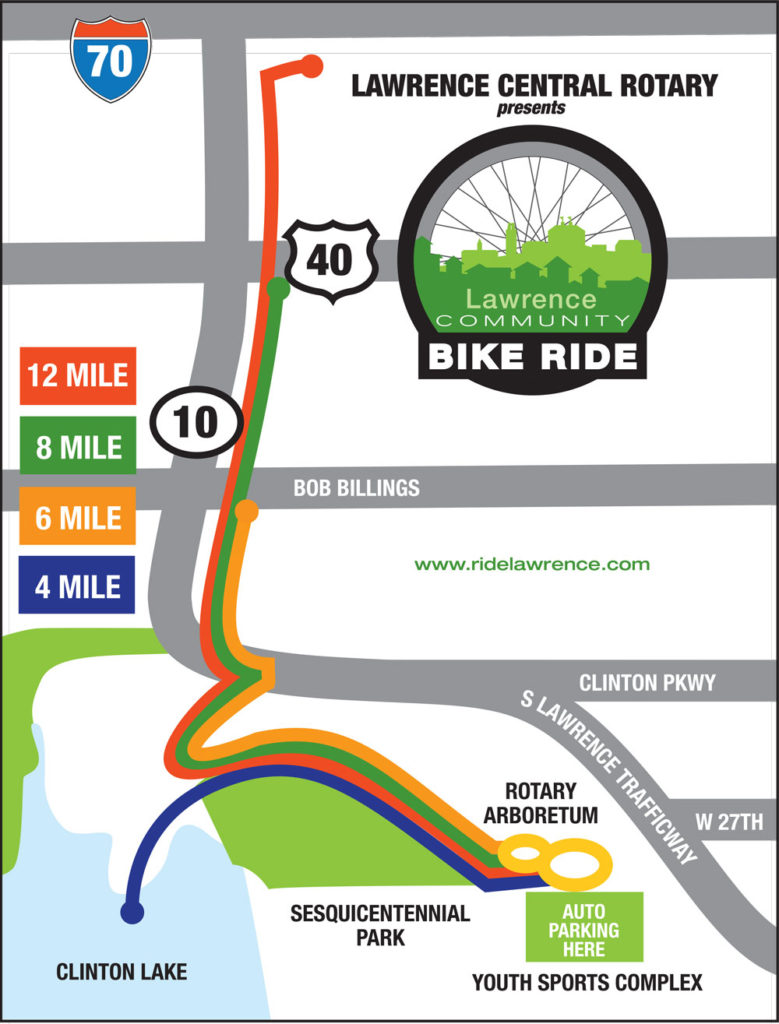
    What an honor to recognize our hardworking members and ongoing projects, including the Lawrence Community Bike Ride, Ride Lawrence, and the Lawrence Kids Calendar!!

    It takes MANY people and MANY years to make a “Club of the Year”!

    Our club is a team AND a family – want to join us? Join us for lunch Wednesdays at noon at the Eldridge Hotel!

  • Pete Dulin Knows Brews

    Pete Dulin got some teasing about the research he conducted in eastern Kansas and western Missouri for his new book Expedition of Thirst. He does admit it was a real pleasure to work on his travel guide focused on regional breweries and wineries.

    On April 1, 2019, Kansas law changed to allow grocery and convenience stores to sell strong beer. The new law lifted a restriction that dated from the time of Prohibition, according to Dulin. Dulin went on to explain that in the 1880’s, before Prohibition, Kansas was the number one producter of beer and wine in the United States. Then, ironically, forty years prior to federal Prohibition, Kansas became the first state to enact a statewide rule against alcohol.

    Today, craft beer has rebounded to have a $480 million impact in the Kansas economy, ranking the state 43rd in the production of craft beer in United States according to the Brewers Association 2017 statistics. Still, Missouri craft beer production is six time that of Kansas and generates twice the revenue.

    Many small breweries start as a “food pub,” brewing beer to serve with food for local customers. Those breweries may sell their beers from the taproom, but to expand their distribution, they must find a distributor to reach retailers as required by state law.

  • Hannes Zacharias’ River Replay

    In 1976, Hannes Zacharias paddled a canoe down the Arkansas River from his home in Fort Dodge, KS, to the Gulf of Mexico. In 2018, Zacharias took the adventure once again. In his replay, he started at the mouth of the river in the mountains of Colorado, making the 2,060 mile trip to Venice, LA, largely by kayak.

    Hannes Zacharias speaks to Rotarians

    The plot pf Zacharias’ story focused on the significant changes that he observed in the river itself as much as his tales about the people and the places he encountered.

    The mouth of the Arkansas River is in central Colorado. It is the sixth-longest river in the United States, the second-longest tributary in the Mississippi–Missouri system, and the 45th longest river in the world. Fed by snow melt in the Rocky Mountains, water in the “Ark,” as Zacharias calls it, flows through Colorado, Kansas, Oklahoma, and Arkansas before joining the Mississippi River.

    In the upper miles of the Ark, recreational uses such as rafting, canoeing, kayaking and fishing are available only in compromise with ranchers who are reluctant to give access to the river.

    Once the river hits the plains, reservoirs intended to control flooding and supply irrigation systems divert the water. As a result, the water that remains in the river is of poor quality. And often, the river bed is completely dry. Zacharias estimates that he was unable to travel on water for about 250 miles of his trip down the river channel.

    By the time the river goes through Oklahoma, it fills with water again to supply hydroelectric power plants. Below Tulsa, a series of locks and dams begins, facilitating commercial barge traffic.

    Once the Arkansas River joins the Mississippi, the water travels another 600 miles before entering the Gulf of Mexico. When Zacharias finally reached the mouth of the Mississippi, he poured water that he had collected at the mouth of the river in Colorado into the Gulf waters.