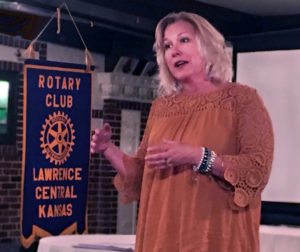
Helen Schnoes, Food Systems Coordinator for Douglas County, explained the proposed Douglas County Food System Plan. The draft proposal was released in January 2017 for public comment and was presented to the Douglas County Commissions on June 14. It was heard by the City of Lawrence in March. The policy is the result of extensive input and research including 13 focus groups, listening surveys with feedback from over 450 people, several experimental projects, and 13 public forums. Although it is a document separate from the Comprehensive Plan and does not change code nor commit funds, it will serve as a valuable statement of vision and a guide for future decisions regarding “Farm to Fork” initiatives.
Established by the County Commission in 2010, by the Douglas County Food Policy Council (FPC) seeks to identify the benefits, challenges, and opportunities for a successful, sustainable local food system in Douglas County. Their goals are Wellness, Equity, Economy, and Environment. The FPC advises the Douglas County and City of Lawrence Commissioners on food-related policy issues and provides a forum for the community. As a joint county and city-appointed group, the group includes 23 diverse stakeholders–from agricultural producers to extension agents, retail food partners and more–all collaborating to improve the local food system. Schnoes serves as the liaison between the County and the Food Policy Council.