Author: Kate Campbell

  • Boys Thrive at O’Connell Youth Ranch

    Gina Meier-Hummell, Executive Director of the O’Connell Youth Ranch, spoke to Rotarians about the work at the Youth Ranch. She is the former Secretary of the Kansas Department for Children and Families.

    For 45 years, O’Connell Youth Ranch has been key to keeping young men out the prison system in Kansas. It sits on 125 acres east of Lawrence on O’Connell Road. There is currently space for 24 young men who range in age from 8 to 18 years-old in three houses. Residents attend the Lawrence Public Schools and/or work in the area.

    Youth are referred to the Ranch by one of the Kansas state agencies that manages foster care placement. Most suffer from mental health issues, trauma, depression, addiction, and/or suicide. O’Connell is their home as long as needed, typically from 6 months to several years.

    Meier-Hummel explains that residents find purpose in being active and making real contributions on a working ranch. The staff uses a strict behavior modification system, emphasizing positive reenforcement. The environment provides calm, rational, non-emotional, fair, and consistent direction to boys and young men who have not had such structure in the past. Successful behavior allows them to gain freedoms such as getting a driver’s license, finding a job, or joining a sports team at school. Most thrive in the structure and routine to learn self-control.

  • Riverkeepers Monitor Kansas Waterways

    Dawn Buehler, Executive Director of Friends of the Kaw and Kansas riverkeeper, spotted otters on the Kaw recently. Buehler is one of only a few riverkeepers in the Midwest. Riverkeepers are committed to protecting and preserving the rivers and other waterways in a region.

    Kansas waterways are in trouble due to sediment and harmful algal blooms (HAB), and the Kansas River is a prime example of the types of problems that are occuring. Tuttle Creek Reservoir is shrinking quickly, for example. Recent floods increased the sediments, and efforts are underway to stabilize stream banks, encourage no-till farming and cover crops, and establish buffer zones in order to avoid creating a whole new reservoir. Dredging is too expensive.

  • Special Olympics Involves Many in Douglas County

    Michael Becker, a structural engineer by profession, volunteers as Director of Operations for Douglas County Special Olympics. He also serves as lead coordinator for basketball, track & field, golf, and bowling competitions.  He got involved “through marriage.” His wife and his sister-in-law recruited him to start coaching in 2013.   

    The mission of Douglas County Special Olympics is to provide year-round sports training and athletic competition in a variety of Olympic-type sports for children and adults with intellectual disabilities in the Douglas County area.

    Special Olympics grew when Eunice Kennedy Shriver focused the attention of the Joseph P. Kennedy Jr. Foundationon on individuals with special needs.  In 1968, the first Special Olympics event took place involving teams from the United States and Canada in 200 events.  Now, more that 5.3 million athletes compete from more than 170 countries.  

    The Douglas County Jayhawks has 97 athletes on its active roster. Ranging in age from 15-56, they participate in 18 different competitions or events, eight of which were newly-established in 2019.  All of the programs are run by volunteers; they devoted 6,500 hours last year.  There are regional and state level tournaments for each sport.  The Young Athletes program teaches children 2-7 years old to share, take turns, follow directions, and maintain healthy habits.

    The group conducts various fundraisers during the year and welcomes help from the community.  Becker encourages anyone interested to get involved!

  • South Korea’s Role in Vietnam War is Focus of Dissertation

    Hosub Shim discussed his research on South Korea’s involvement in the Vietnam War between 1965 and 1973.  A major in the South Korean military, Shim will complete his Ph.D. in history at KU this spring and then will return to South Korea to teach history to military cadets. Shim first spoke to Lawrence Central Rotary about 3 years ago when he began his doctoral program.  

    Although the Vietnam War was as controversial in South Korea (ROK) as it was in the United States, South Korea had the second largest number of forces stationed there.  The country found it was in their national interest to have strong ties with the United States; they leveraged their military help in exchange for U.S. assistance with strengthening their army and spurring their economy.  Their involvement was a turning point to becoming a prosperous country. 

    South Korean troops were largely stationed on the eastern coast of Vietnam, a safe location that kept casualties low.  South Korea refused to allow the U.S. to control their operations, maintaining a policy of pacification as opposed to the U.S. strategy of “search and destroy.”  

  • LaClair Visits USS Harry Truman

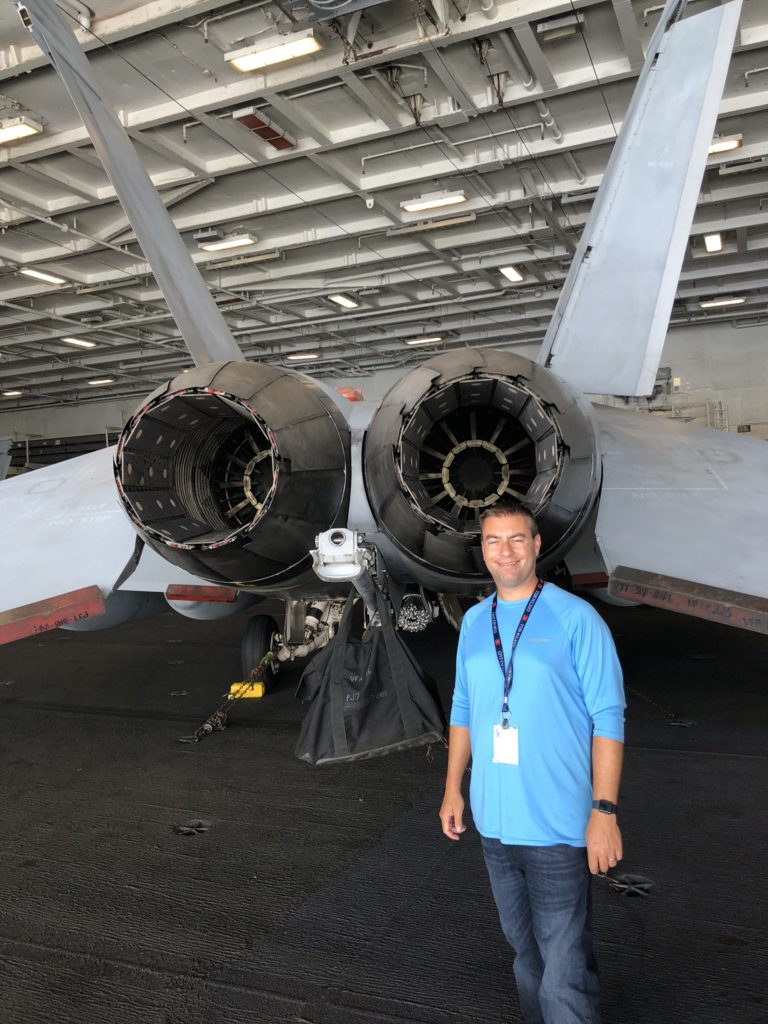
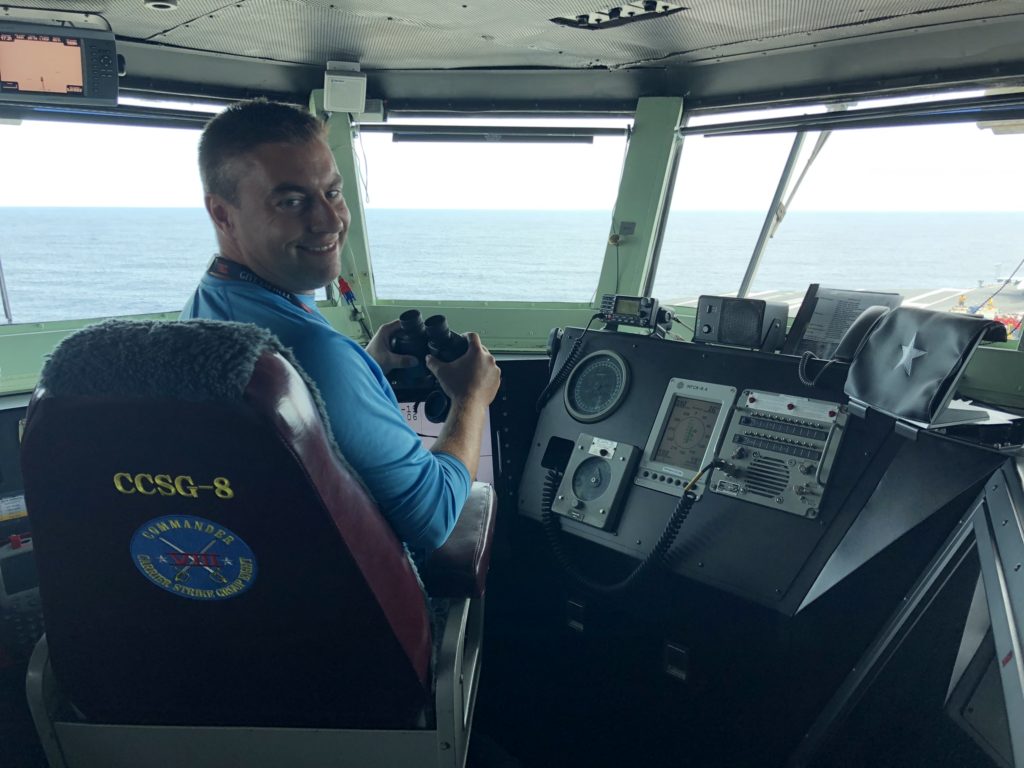
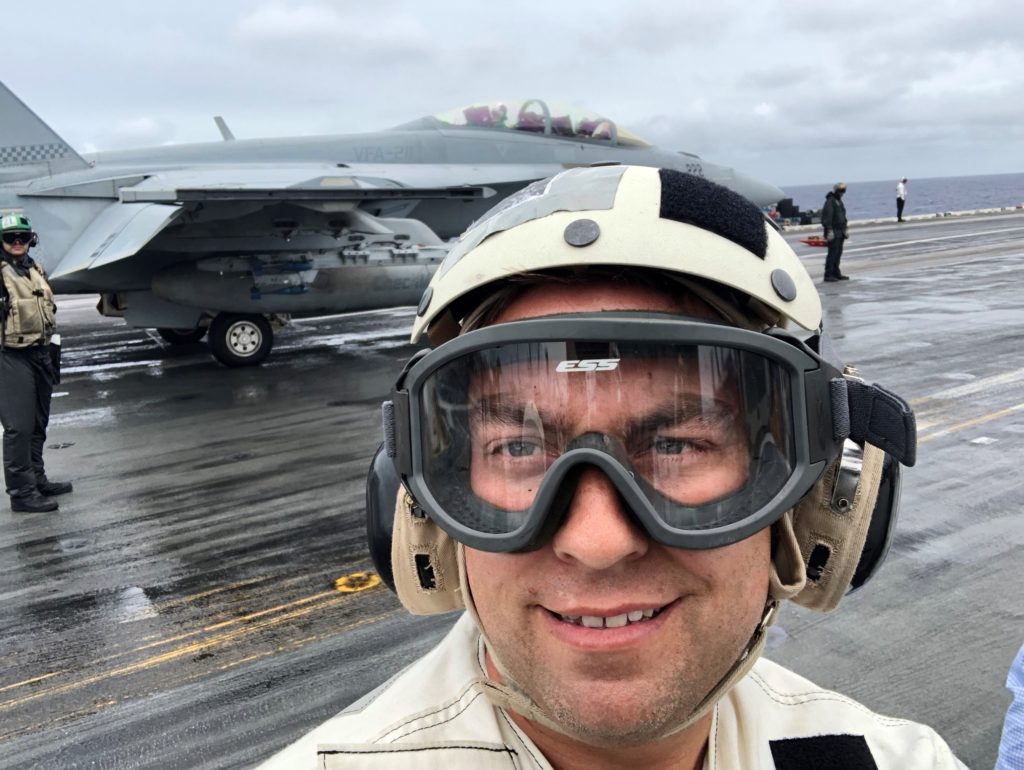
    Lawrence Central Rotary’s own Chip LaClair told the story of his recent tour of the aircraft carrier the USS Harry Truman. 

    Chip, his father, and his brother joined a small group of defense contractors who were flown out to the ship as it was underway in the open sea.  Chip is a pilot himself, so the experience of landing and taking off from the deck of an aircraft carrier was quite dramatic for him. Chip described the tail hook landing mechanism and the launching catapult and proudly cited his Tail Hook Society membership credentials. 

    Chip was impressed with the professionalism of the crew and commented on the challenge of training and managing such a large and diverse crew on extended deployments.  Chip shared souvenirs and photographs of his memorable experience.

    The USS Harry Truman was built at a cost of 4.5 billon dollars and commissioned in 1998. It is taller than a 24-story building and can accommodate a crew of more than 5,000.  The vessel carries 90 fixed-wing aircraft and helicopters and has a 1,096 foot by 257 foot flight deck.  Two nuclear generators power the ship, and it can reach speeds in excess of 30 knots. 

    The USS Harry Truman is the flagship of Strike Group Eight, which is a group of war ships that can project military power around the globe for the interests of the United States.   The ship has seen action in the Mediterranean and the Persian Gulf and provided hurricane relief in the Gulf of Mexico. Its home port is Norfolk, Virginia.