Category: News

  • Walden Focuses on the Supply Chain

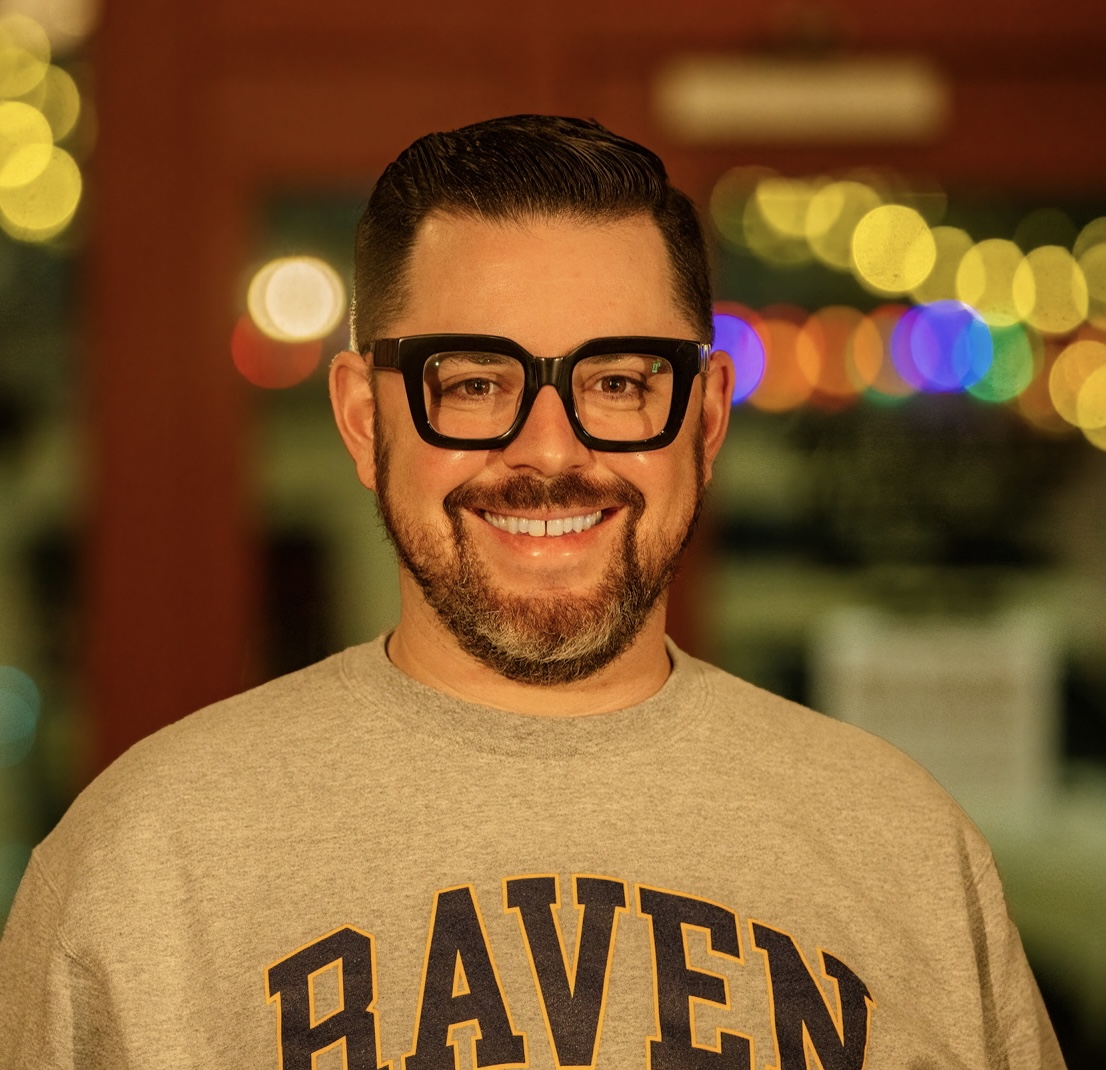
    The supply chain is getting lots of attention these days and lots of blame for our economic woes.  Who better to make sense of it all than Joe Walden, associate teaching professor at Kansas University and expert on supply chain management.

    Walden is a retired U.S. Army Colonel with an extensive background in logistics.  He also holds advanced degrees in engineering management, operational planning, systems management and logistics, and curriculum and teaching.  Presently his focus is on supply chain security and reverse logistics.  In addition to his professional accomplishments, Walden is a three -time world champion weight lifter in his weight class.

    When things are working as they should, the supply chain is invisible.   The supply chain is made up of organizations, people, activities, information, and resources involved in moving a product or a service to the end user.  When something disrupts part of the supply chain, like a pandemic, it can have a ripple effect through out the system. 

    Our economy operates on a “just in time” model which means local inventories can run short if there is a disruption to the supply chain.  Presently, on-time deliveries are at an all-time low due, in part, to chip shortages, port backlogs, business closures, and shortages of workers.  Labor and fuel costs are pushing prices up, but Walden asserts that some of the price increases are opportunistic.  Hoarding makes things worse as panic buying creates shortages and drives up prices. Demand eventually falls and producers reduce production, creating another shortage on down the road.  An additional factor adversely affecting the economy is a 25% return rate on online purchases, creating a huge problem for retailers. 

    Walden is optimistic that these problems are being addressed.  For example, a “just in case” approach to the supply chain has had some success.  This strategy involves better planning, a need forecasting, preparedness, resiliency, and a better focus on the customer.  He also believes the growth in small truck deliveries has created new jobs and reduced the reliance on a large-truck shipping model.  Walden says he tries to inspire at least one person every day–which seems like a great goal for us all.

  • Right to Read: Don’t Take It for Granted

    There was a good turn out to hear Lawrence Public Library Director Brad Allen talk about censorship efforts to ban particular books from schools and libraries.  Sometimes parents object to a book because they are concerned that the material poses a threat to their child.  Sometimes books are objected to because they are perceived as a threat to the establishment.

    This topic is a timely one as presently there are numerous reports of organized efforts to protest critical race theory and other books addressing problems with American culture.  Censorship has been an issue throughout American history.  The Comstock Laws passed in 1872 provided prison time for sending pornography through the mail, which at that time included factual information on birth control.  Currently our society is extremely polarized and considerable efforts have been employed to silence critics. 

    In 1982, the American Library Association (ALA) established Banned Books Week to celebrate the freedom to read and raise awareness of challenged and banned books. Many more books are challenged than are actually removed from the shelves.  Most libraries have a process for dealing with challenges which involves collecting information about the challenge and convening a committee to review the objections and the book.  The committee makes the decision about the fate of the book. 

    Presently, activists are attempting to put like-minded people on governing boards in an attempt to shape the culture. The variety of book challenges varies from children’s books to such authors as Toni Morrison, John Steinbeck and Harper Lee.  A book may be removed from the collection for having inaccuracies, being dated, or having insufficient literary merits.  However, most challenged books stay in the collection. 

    Allen was asked about the future of public libraries.  He said that people have been predicting the demise of public libraries for many years.  However libraries have embraced technology and demonstrated adaptability and relevance. 

    Allen has an interesting background, taking degrees in American Studies, Psychology, African Studies and Library Science.  He also loves music and played in a funk band.  Allen has served as director of the Lawrence Public Library for ten years and is credited with significant growth of library programing and services.


  • Protecting Plants Is A Challenge

    Jennifer Smith writes a weekly column in the Lawrence Journal World concerning plants and other things horticultural.  A veteran of the Kansas Department of Agriculture’s extension service, she plays a significant role by inspecting  nurseries and greenhouses for pests that might infest local plants.

    Her work is established by law.  The USDA’s Animal and Plant Health Inspection Service (APHIS) runs the Plant Protection and Quarantine (PPQ) program to  “safeguard U.S. agriculture and natural resources against the entry, establishment, and spread of economically and environmentally significant pests, and facilitates the safe trade of agricultural products.”

    What is a pest?  Weeds, algae and fungi, and insects all can damage plants.  The pests may be endemic–that is, indigenous to a locale–or exotic–that is, imported from elsewhere.  A pest creates an economic or environmental hazard.  

    The emerald ash borer is a prime example of an exotic pest.  The Emerald ash borer was not identified as a problem when it first appeared in the United States.  Once it was, specialists tried all sorts of mitigation strategies, but they have been unable to halt its spread in the United States.  Other examples of exotic pests include Canadian thistle, the Japanese beetle, and the gypsy moth.

    What can citizens do to assist in the difficult effort to detect, trace, and enforce against infestations?  

    • Avoid monoculture and mix species in your landscape
    • Shop for plants locally
    • Plant species native to Kansas
    • Take time to identify problems that may occur in plants in your landscape


  • Douglas County Extension Program Impacts Lives

    Marlin Bates, the director of Douglas County Extension Services, has made a career of his work in the field.

    Bates explained the history of land grant institutions and the breadth of services that they provide.  Many are unaware of the scope of programs in place to fulfill the land grant mission: “We are dedicated to a safe, sustainable, competitive food and fiber system and to strong, healthy communities, families and youth through integrated research, analysis and education.”

    Many extension programs are familiar to the public: 

    • 4-H Youth Development
    • Health, Nutrition & Safety
    • Lawn & Garden
    • Business & Economics
    • Home & Family
    • Crops & Livestock

    In recent years, extension staff has focused more on programs that address issues at the systems level as opposed to teaching particular skills.   Those broad areas include health, global food systems, community vitality, water and natural resources, and development of leaders.

    During the Civil War, the Morrill Act of 1862 established land grant universities to teach agricultural science, mechanical arts, and military science.  Kansas’ land grant institution is Kansas State University in Manhattan.  The Hatch Act of 1887 widened the definition of land grant institutions to include research and established a network of field stations to conduct that research.  The Smith-Lever Act of 1914 directed the land grant institutions to distribute and disseminate information to the public. 

    Kansas has an extension office in every one of its 105 counties.  Each has a 24-member board that is elected by the citizens in the county.  An executive board tends to day-to-day issues.  Douglas County has fourteen staff.

  • Family Can Be Complicated

    Jim Peter’s explained Eleanor Roosevelt’s family tree, revealing complicated formative relationships in the early life of the woman who served as First Lady for twelve years and became the role model for modern First Ladies. 

    Peter’s comments were a preview of the six-hour course he will teach this winter for Osher Lifelong Learning Institute on “Eleanor Roosevelt: Her Private Struggles and Public Triumphs.”

    Here are facts from Eleanor’s early years:

    • Eleanor was a descendent of the Oyster Bay Roosevelts in New York. The family gained wealth in business and banking and was known for its philanthropy and political influence.
    • Born in 1884, the daughter of Elliott and Anna Hall Roosevelt, she was named “Anna Eleanor.”
    • President Theodore Roosevelt was her uncle, her father’s older brother.
    • Her mother and one of her two brothers died when she was eight years old, and she was orphaned by the time she was nine. 
    • She was raised by her maternal grandmother Mary Livingston Ludlow Hall along with aunts and uncles who were close to her in age.
    • Schooled at home until she was 15, she then attended finishing school at Allenswood Academy in England where she played field hockey, danced, and toured Europe.
    • In 1907, she married Franklin D. Roosevelt, one of the Hyde Park Roosevelts. He was her fifth cousin once removed.