Category: News

  • Family Can Be Complicated

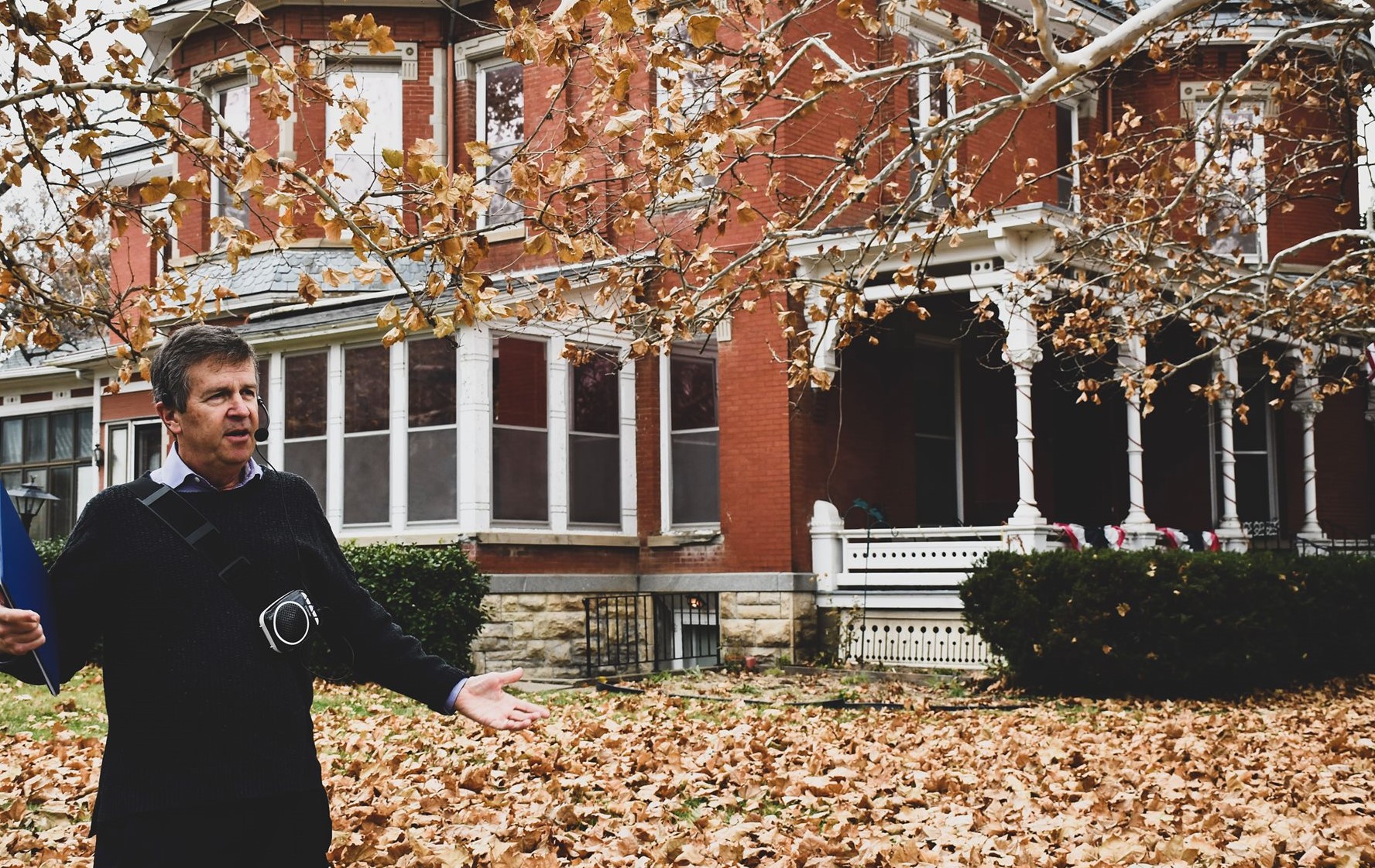
    Jim Peter’s explained Eleanor Roosevelt’s family tree, revealing complicated formative relationships in the early life of the woman who served as First Lady for twelve years and became the role model for modern First Ladies. 

    Peter’s comments were a preview of the six-hour course he will teach this winter for Osher Lifelong Learning Institute on “Eleanor Roosevelt: Her Private Struggles and Public Triumphs.”

    Here are facts from Eleanor’s early years:

    • Eleanor was a descendent of the Oyster Bay Roosevelts in New York. The family gained wealth in business and banking and was known for its philanthropy and political influence.
    • Born in 1884, the daughter of Elliott and Anna Hall Roosevelt, she was named “Anna Eleanor.”
    • President Theodore Roosevelt was her uncle, her father’s older brother.
    • Her mother and one of her two brothers died when she was eight years old, and she was orphaned by the time she was nine. 
    • She was raised by her maternal grandmother Mary Livingston Ludlow Hall along with aunts and uncles who were close to her in age.
    • Schooled at home until she was 15, she then attended finishing school at Allenswood Academy in England where she played field hockey, danced, and toured Europe.
    • In 1907, she married Franklin D. Roosevelt, one of the Hyde Park Roosevelts. He was her fifth cousin once removed. 
  • Ring Those Holiday Bells!

    It’s a club tradition to ring the bells for Salvation Army donations during the annual Old-Fashioned Christmas parade on Massachusetts Street. The first Saturday of December once again found Lawrence Central Rotarians stationed near the red kettles.

  • Restorative Justice Comes to Douglas County

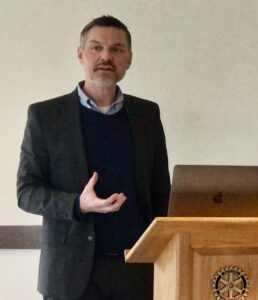
    Lyle Seger and Lisa Larson spoke about the new Douglas County restorative justice program.  Lyle is a mediator and restorative justice facilitator for the Center for Conflict Resolution and a founder of the nonprofit Building Peace.  Lisa is a City Commissioner and works in conflict resolution and mediation. She is also affiliated with Building Peace. 

    Restorative justice is a concept that emerged from indigenous communities in North America and New Zealand.  European settlers had a more narrow concept of justice that involved trial, conviction and punishment.  Restorative justice attempts to find a more satisfying approach to address the harm done in a crime.  The goal is to identify satisfactory retribution, resolve conflict, and promote healing.   

    Started in 2020, the restorative justice program in Douglas County has a staff of five mediators who work with lawyers, court representatives, crime victims, perpetrators, and community members impacted by a crime. 

    The District Attorney makes the determination of a case’s eligibility for restorative justice.  It is a voluntary process and is available for less serious offenses and younger offenders.  Perpetrators are required to address the harm done face to face with victims and stakeholders in the larger community.  Completion of the process results in expunging of the criminal record.

    Restorative justice reduces the number of young people going to jail.  The recidivism rate is under 50 per cent, and some 70 per cent of victims are satisfied with the process.  The new program is primarily funded by grants. 

    At the end of the day, restorative justice focuses on how a crime impacts on the victim and the community.  The process works to promote healing, build peaceful relationships, and a stronger and more just community.

  • Scott Thellman, Ag Entrepreneur

    Scott Thellman, a first generation farmer, tells the story of how he started Juniper Hills Farms in 2006. His business savvy, interest in distribution systems, and passion for agriculture have meshed in this new enterprise.

    It all began when Scott’s family moved to the country north of Lawrence in 1999. He began helping the man who rented the property with production work. 

    Even in high school, Thellman began to purchase equipment to cut and bale hay.  Loving the work and realizing that he could make money, he bought more and better equipment with a youth loan he received from a USDA program. Even before graduating from high school, he expanded his operation to include more hay land and specialty crops.

    After trying out several different university ag programs, Thellman graduated in 2014 with a degree in agri-business, economics, agronomy, and leadership.   About that time, he used what he was learning about food aggregation and local food distribution systems to leverage his investment in a large refrigerated truck by distributing for other producers as well as for himself. 

    Growth was  steady until COVID hit.  At that point, Spellman adapted to the closing of his traditional markets in restaurants, schools, and grocery stores by creating Sunflower Provisions, doing pick up and deliver in and around Lawrence and expanding to serve more producers.

    What lies ahead? For one thing, Juniper Hills will soon establish an industrial kitchen in North Lawrence. Spellman envisions producing salsa and marinara sauce using vegetables that might otherwise be wasted. He would also like to add to production of food-grade corn and soybeans.

    Spellman will continue to experiment with ways to vertically integrate his business, a slow and steady growth pattern he believes is destined for success.

  • Fighting Hunger and Food Insecurity

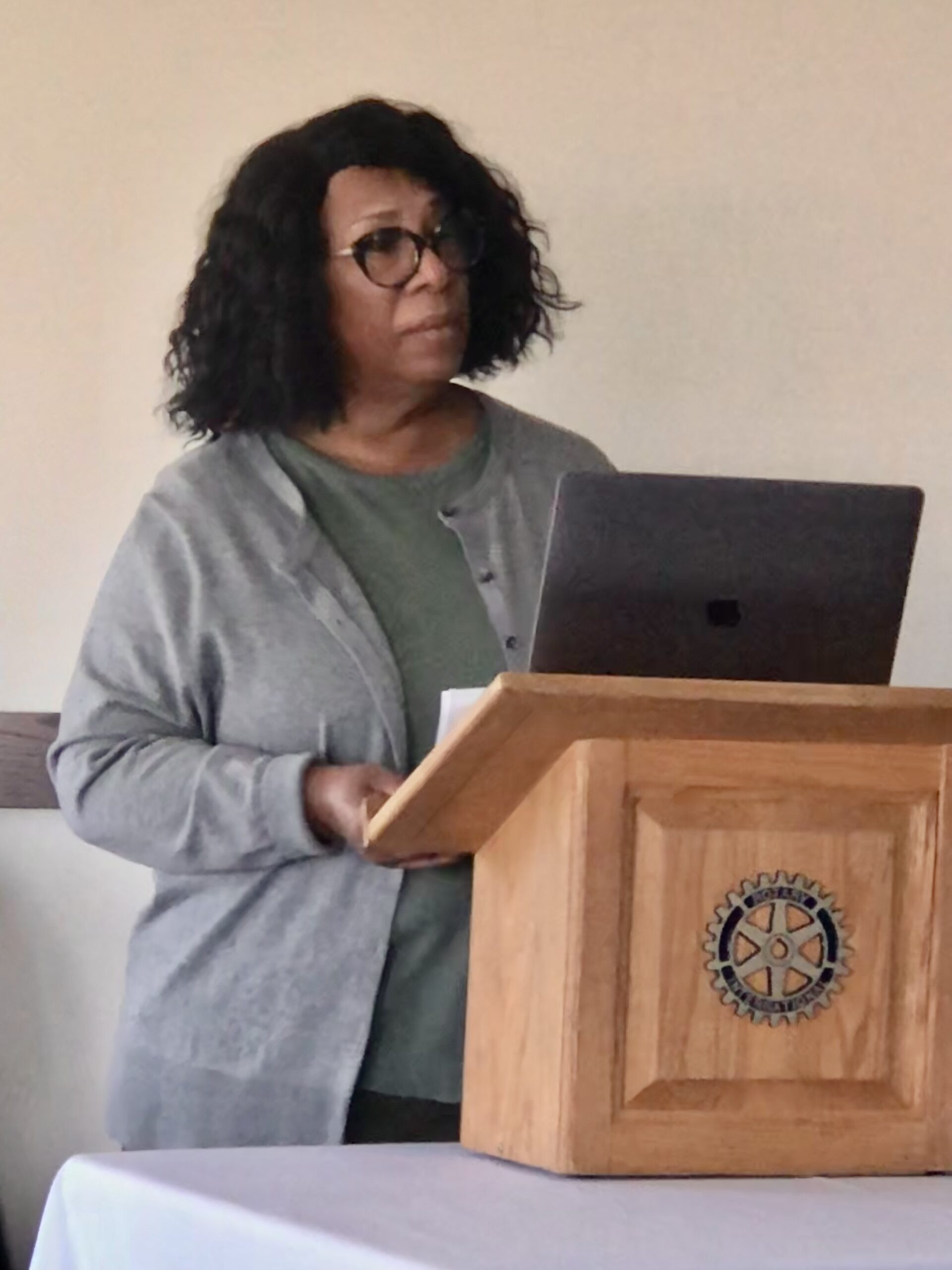
    Ryan Bowersox, Director of Marketing and Outreach for Just Food, explains how the agency has expanded its programs in Douglas County beyond the food bank itself. 

    Just Food serves 150-300 families each day, providing access to nutritious food while maintaining a sense of dignity for all.  The organization seeks to address the root causes of hunger and to cultivate self-sufficiency .  Just Food also works to establish a culture of stewardship, sustainability, transparency, diversity and equity.  Elizabeth Keever is Executive Director and is responsible for operations, working with an advisory board. 

    Program elements consist of food recovery,  pantry shopping and mobile food distribution for rural areas of the county as well as a popular diaper bank.  The newly remodeled main facility hosts educational classes like Just Cook, which provides instruction in food preparation and nutrition.  Kitchen Works prepares people for careers in food service, and Just Grow teaches gardening techniques and makes garden plots available. 

    Volunteers play a critical role by working in the food pantry, in the warehouse, as drivers and as instructors.  Volunteers also assist in putting on special food and fund raising events. 

    Just Food collaborates with at least 19 agencies to deliver services. Partners include Bert Nash, the Lawrence Community Shelter, the Humane Society, the Willow Domestic Violence Center, Lawrence Memorial Hospital, the Lawrence school system, the University of Kansas, and Haskell University. 

    The pandemic has contributed to a huge increase in hunger in the county. Eligibility requirements for service are minimal, and half of the people served are Caucasian. In 2020, 22,433 people were served, almost 2,000 home deliveries were made, 653,473 pounds of food was recovered,  57,600 diapers were distributed, 28 coaching sessions were conducted, and 11,901 volunteer hours were logged.