Author: Kate Campbell

  • Osher Zooms Its Programs to Kansas Seniors

    Linda Kehres, Director of the Osher Lifelong Learning Institute, was on the job only a few months before the organization was forced to reorganize its program delivery of continuing education programs to area seniors. Face-to-face classes in 2020 were out of the question during the pandemic. The solution was Zoom. Teachers successfully adapted their classes to the popular online platform, and Osher was back in business.

    Presently, Osher’s highly-qualified instructors present classes in three weekly 90-minute sessions.  There are no tests, grades or homework.  Classes are scheduled at various times of the day and the week.  There is a $50 fee for each course.  The age of the average participant is 74, but there is no age restriction. 

    Over 100 classes are offered this spring, and 46 of them are new offerings. History topics are the most popular and courses are also offered on literature, art, music, current events, religious studies, film, entertainment and geography.  Osher is always look for new teachers, sponsors, and donors. 

    The program is a great way to expand horizons at a time when travel and contact with others is limited.

    The local Osher Institute was established in 2004 and is affiliated with Kansas University.  Philanthropist and businessman Bernard Osher established a foundation in 1977 to encourage continuing educational opportunities for seniors.  Presently there are over 100 Osher Institutes through out the country. 
  • What Does It Mean to Be Trauma-Informed?

    Kim Polson, Executive Director of Community Children’s Center (CCC), used the acronym ASRI to explain the “trauma-informed” concept. 

    Trauma-informed means to be Aware of the prevalence of trauma, Sensitive to its impact, Responsive in order to begin change, and Informed about practices that help those who have experienced trauma to cope with the world.  One of CCC primary roles in Douglas County is to deliver workshops to develop ASRI skills for caretakers and educators of young children. The training can move organizations in all sectors along the trauma-informed continuum.

    CCC was founded in 1985 to establish one the first Head Start programs in the country.  When the organization’s Head Start delegate role was eliminated in 2018 by the Federal government, the CCC Board envisioned a new set of tasks for itself in Lawrence and Douglas County.  The new role retains the mission:  “…to bring about a greater degree of social-emotional competence and school success for young children and their families experiencing economic, educational and social challenges by providing caregivers with training, coaching and support.”

    CCC recently received funding to develop an online hub for all things early childhood in Douglas County.  The hub will be a community-wide, cross-sector partnership.  The site will provide a  “one-stop shop” for those caring for children, birth to 5 years of age, and will “connect the dots” for creating logical pathways and seamless online navigation. 

  • Public Art Generates Dialogue

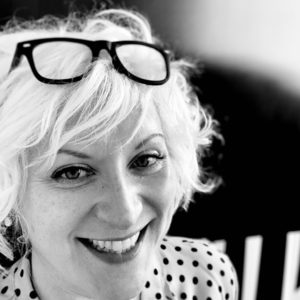
    As Rotarians eagerly told stories about their encounters with pieces of art that were special in their eyes, Spencer Museum Director Saralyn Reece Hardy easily confirmed that art delights the public most when it generates dialogue and discussion.  

    According to Hardy, art should inspire learning, challenge assumptions, and cause reflection.  No longer do artists wish to be didactic and “tell” the  meaning of what they create.  Rather, the shifting goal of art is to leave the walls of traditional museums and meet the public wherever they are. 

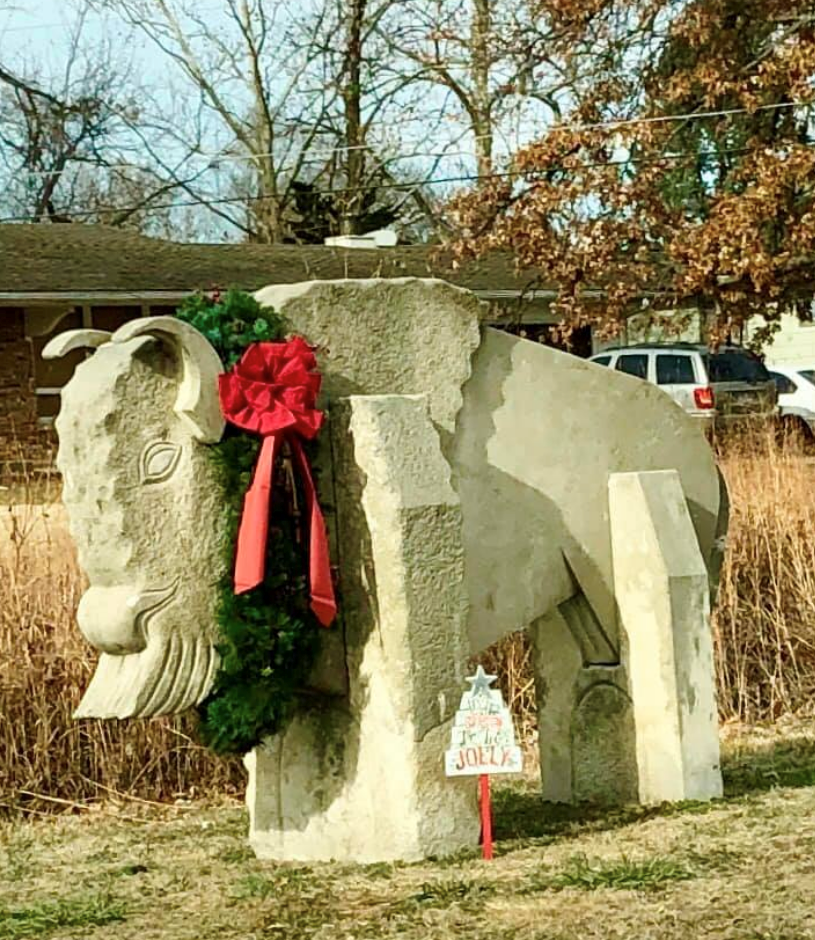
    Memorials in particular stimulate public dialogue.  Rotarians shared their personal favorite pieces, sharing the reasons why each was memorable and meaningful:  the KU campanile dedicated to those who served during World War II; field art created by Stan Herd; the buffalo by Jim Patti located on Clinton Parkway & Lawrence Avenue; the shuttle cock sculptures and Monet’s water lilies at the Nelson Atkins Museum in Kansas City; the 9/11 Memorial in New York City;  and the monument to Winston Churchill in London, England.  The group acknowledged that the bike racks that Lawrence Central Rotary commissioned and placed around town are also pieces of public art.

    JIm Patti’s buffalo sporting a holiday wreath
  • Arts for Everyone, Everywhere

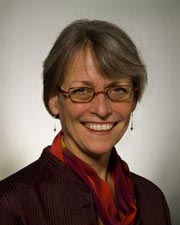
    Margaret Weisbrod Morris‘s background in arts education and art therapy makes her an eloquent advocate for the arts.  She relishes her work as Chief Executive Director of the Lawrence Arts Center..  She and her staff strive daily to bring joy to residents of Douglas County and beyond.  

    Morris explains that the arts sustain the infrastructure of culture, preserve democracy, and record who we are.  Involvement in the arts correlates to improved school success, employability, and civic engagement.  The arts have an impact on health and wellness and build the trust and empathy that can bring people together.

    In addition, the economic impact of the arts is substantial.  The arts make up 4.3% of the U.S. economy and employ 2.04% of the workforce.  In Douglas County, the impact is proportionately even higher.  A dollar spent on the arts in Lawrence has an impact of $24.25.  Arts generate $1.25 million in local revenue.

    The Lawrence Arts Center has been able to avoid staff and programming cuts during COVID because of a particular benefactor.  As a result, it has continued to deliver activities and performances that sustain community well-being.  In addition, Morris notes, the organization has found it needed to be creative in a whole new sense, re-inventing its delivery systems to include online tools and devising strategies to become accessible to distant and wider audiences.  Innovative programs include Kitty City and a youth theater production of “The Big One-Oh” in a video-on-demand format.

  • Dr. David Cook

    Dr. David Cook, Vice Chancellor for Public Affairs and Economic Development at the University of Kansas, provided an update about KU, it’s current issues and initiatives. 

    Dealing with COVID pandemic has been the preoccupying concern of University leaders.  Testing protocols that were implemented in fall 2020 have proved to be successful, and the University will adopt a similar plan for the 2021 spring semester.  Cook was pleased to report that at this time there have been no transmissions, no hospitalizations, and no deaths associated with the virus on campus. 

    Other good news:  There was a smaller enrollment drop due to the pandemic than anticipated last spring.  Retention of students has been good with drops occurring primarily in the international student population and in number of the incoming freshman. 

    The University continues to move forward on several initiatives.  A new Welcome Center to be located near the Alumni Center on campus will improve the first impression that the campus presents to prospective students.    

    Other initiatives include KU’s involvement with the University Engineering Initiative Act (UEIA); an expansion of the Bioscience and Technology Business Center (BTBC) on west campus and work to recruit companies for job growth and capital investment and to place graduates in the local economy; and the Diversity, Equity, and Inclusion (DEI) task force will make recommendations.