Author: Kate Campbell

  • Microbes and Mankind

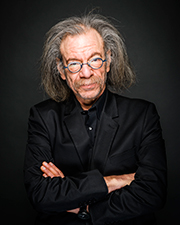
    Kris Krishtalka is someone who thinks deeply about genomic biodiversity, evolutionary patterns, and the history of science. He is professor of Natural Sciences and Mathematics – Ecology & Evolutionary Biology. He also serves as director of the KU Biodiversity Institute.

    Kris declares that humans are the newest and most powerful geologic agents transforming the planet.  As evidence of the impact of human activity, he notes that the earth stopped vibrating for four months in early 2020 when people stopped their normal routines in order to control the coronavirus.  We create, transform, and destroy life of earth.

    He names five urgent challenges now facing mankind: 

    1. Appreciating the diversity of life by documenting more of the 3.6 to 18 million species estimated to live on the planet.
    2. Figuring out how are species related.
    3. Learning the language of life in genomes and their coding.
    4. Exploring how ecosystems fit together and their interdependencies.
    5. Accepting that natural history and human history are now one and the same.

    To address the challenges at hand, Kris believes we must focus attention on microbial life. As a recent article in The Economist entitled “Microbes Maketh Man” explains, human metabolism and health are controlled by microbes.  They are ubiquitous, ever-changing, superabundant, diverse, and comprise 95% of the biosphere. 

    Read more of Kris’ ideas in the Biodiversity blog at KU.

  • Team Brownsville Helps Asylum Seekers

    Educators and other volunteers walk from the bus station in Brownsville, TX, across the Rio Grande to Bridge Plaza in Matamoros, Mexico.  Each pulls a wagon of food, basic necessities, and donated clothing and shoes.  What began as a modest effort to help those seeking asylum in the United States has evolved into a robust non-profit entity called Team Brownsville.

    Cynthia Smith, Lawrence-area attorney, activist and volunteer, visited Brownsville in late 2019.  She described the situation to Lawrence journalists when she returned, declaring “these are human beings” and deserve our help.  

    Brownsville educators initiated assistance to asylum seekers when the Department of Homeland Security changed the protocols for people seeking admission to the U.S.  These people are attempting to enter the United States legally.  They are individuals and families who are running for their lives from drug cartels and gangs.  Smith pointed out that they were peaceful, organized, industrious, and grateful for help.

    Each person or family seeking asylum is interviewed.  If they are deemed to have a “credible fear,” they are referred to immigration court.  In the past, they were released into the US with papers to await their court date and could find work and live productively.  Rules in place since January 2019, however, require them to await their court date in Mexico.  Most squat in tent cities just across the border.  They have neither resources to be self-sufficient nor other types of support.    

    Thanks to the on-going attention of Team Brownsville and their own contributed labor, the 1200 residents of the tent city in Matamoros now have water for washing and drinking, portable toilets, showers, and space to ward off COVID infection .  Another non-profit offers medical care.  Volunteers deliver and serve food daily.  They provide “sidewalk schools” for the children.  These basics provide invaluable dignity to those who live in this situation.

  • Better Care for Elderly Kansans

    Mitzi McFatrich is passionate about caring for the elderly in Kansas. 

    In her position as Executive Director of Kansas Advocacy for Better Care, McFatrich helps coordinate an annual legislative forum on senior issues, provides legislative progress reports and assists seniors in participating in the governmental process.

    Founded in Lawrence in 1966 by six women concerned about the quality of nursing homes in the state, KABC is a statewide advocacy group that works to ensure that older adults receive safe, compassionate care at home or in an adult care facility. 

    KABC addresses legislative issues related to the quality of long-term care and the elimination of elder abuse.  It provides guidance and support to elders and their families as they face the challenges of finding quality care and solving care problems. In addition, it provides education and support to constituencies who may need special training in order to deal effectively and safely with the elderly.  Among the publications on their website are a wide assortment of booklets, reports, and other materials.

    McFartrich encourages everyone who shares her concern to participate in KABC’s annual fundraising  event, Stand By Me.


  • Kimball Outlines USD 497 Options

    There are numerous big issues and countless details to address in order to deliver safe and supportive instruction in schools during the COVID pandemic.  

    In mid-July, the Kansas State Department of Education endorsed “Navigating Change,” a 1100-page document that outlines guidelines for school districts as they plan for schools to resume in the fall.  For each cluster of grade levels, the report articulates ways to address Access and Equity, Competencies, Assessment, and Implementation. In addition, there are sections about Operations and Funding.  The document seeks to give guidance on how to keep students, faculty, and staff safe while providing appropriate learning support to all students. 

    Shannon Kimball, president of the USC 497 School Board, outlined the “Navigating Change” document, explained the current decisions that the local school board has made, and made a few predictions about where the district is headed.

    Kimball said that USD 497 has developed three options for achieving the state-required 1,116 minutes of contact time for every student:  traditional in-person instruction; remote teaching/learning; and a hybrid of these two models.  Work groups have devoted summer hours to devising these options.  There have been surveys of parents and of faculty/staff to understand their points of view. 

    At their July 27 meeting, school district leaders decided to postpone the beginning of the school year to  September 8 and to provide virtual instruction only during the first six weeks of the academic year.   A local task force will coordinate and communicate as conditions evolve in the community.

    Kimball assumes there will be a re-set by the end of September, but there will be no easy decisions.   


  • Lied Plans for Quality and Relevance

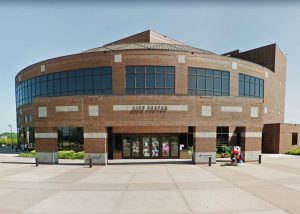
    Derek Kwan, director of the Lied Center in Lawrence, explained the process that he and his staff use to book a winning season of programs. The goal is to devise a selection of options where every potential patron can find something that appeals to their taste. The task is to juggle quality with relevance, Kwan says. A successful selection will bring the necessary critical mass of audiences to the Lied.

    A judgment about quality involves research about what awards and positive reviews a program has received in other places.

    Relevance is an educated assessment of the needs of the various stakeholders that the Lied serves: the Lawrence community and schools; KU and its students; and supporters such as Friends of the Lied, Kansas Public Radio, Osher Institute for Lifelong Learning, and local businesses.

    As Lawrence is a secondary market near Kansas City, the Lied seeks to avoid over-saturating the market. In addition, they must consider the size and cost of the production itself as well as exclusivity concerns.